


When to Consult a Lyndhurst Dog Bite Attorney for Severe Scars
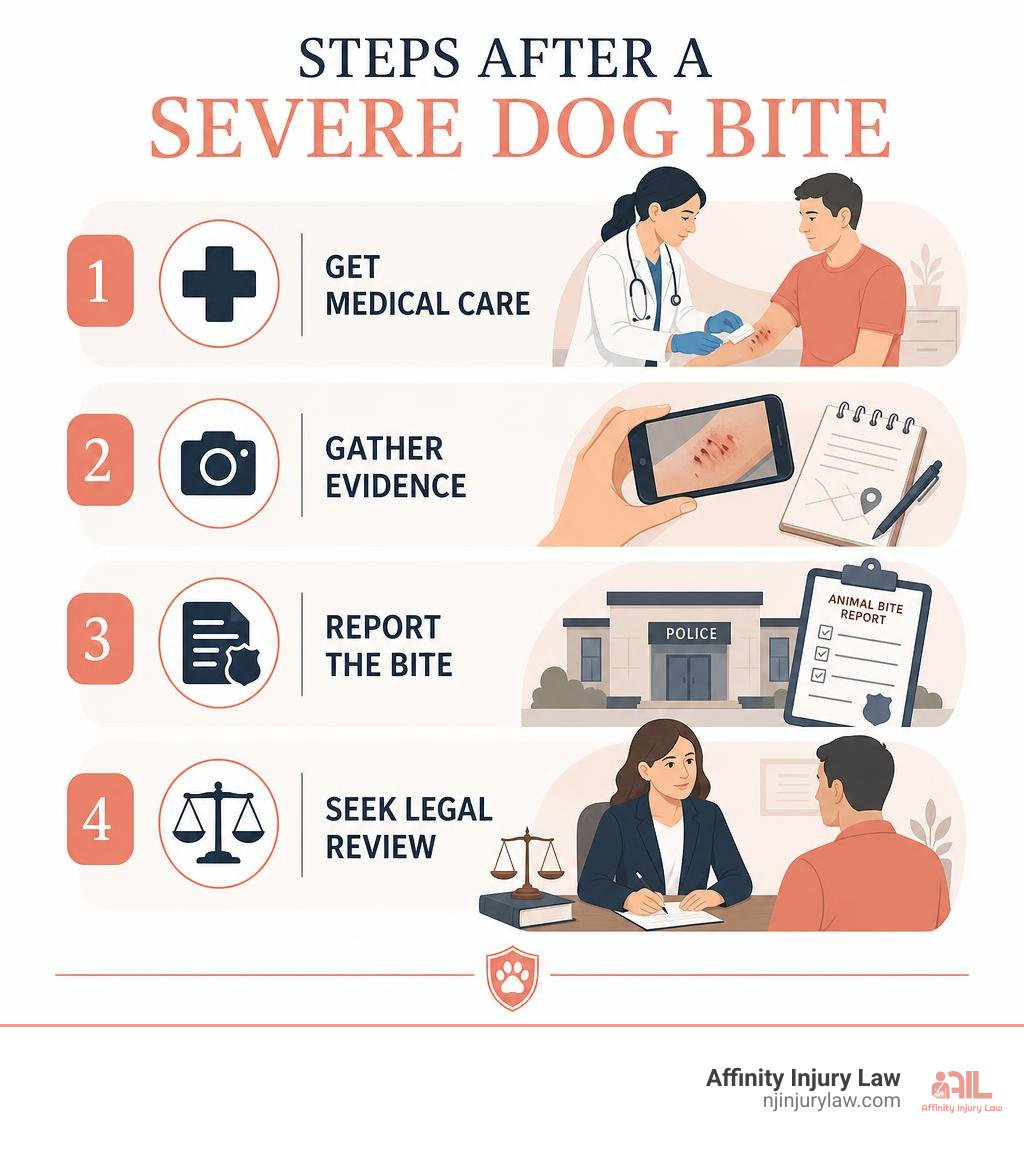
If a dog bite leaves deep cuts, facial injuries, nerve damage, or a visible scar, speak with a Lyndhurst dog bite attorney as soon as possible. Get medical care first, photograph the wound as it heals, report the bite, save every bill and medical record, and avoid giving a recorded statement to an insurer before you understand your options.
Severe bite scars can require stitches, infection treatment, scar revision, counseling, and future plastic surgery. A lawyer can help identify available insurance coverage and pursue compensation for treatment costs, lost income, pain, emotional distress, and permanent disfigurement.
I am Ioana Enescu, Esq., a founding member of Affinity Injury Law who advocates for injured clients seeking the medical care and legal support they need. As a Lyndhurst dog bite attorney resource, I bring a client-focused approach informed by my background and lifelong understanding of the importance of quality medical care.
Understanding the Medical Severity of Dog Bite Scarring

Dog bites differ significantly from other types of lacerations. Canine jaws exert crushing force combined with tearing action. When teeth penetrate human skin, they introduce aggressive oral bacteria directly into deep subcutaneous layers, muscle tissues, and underlying fascial planes.
This trauma produces irregular wound margins, tissue loss, and jagged edges that heal unevenly. The result is often hypertrophic scarring or keloids—thick, raised fibrous tissue that restricts movement and causes significant cosmetic disfigurement.
Physical Trauma, Infections, and Reconstructive Surgeries
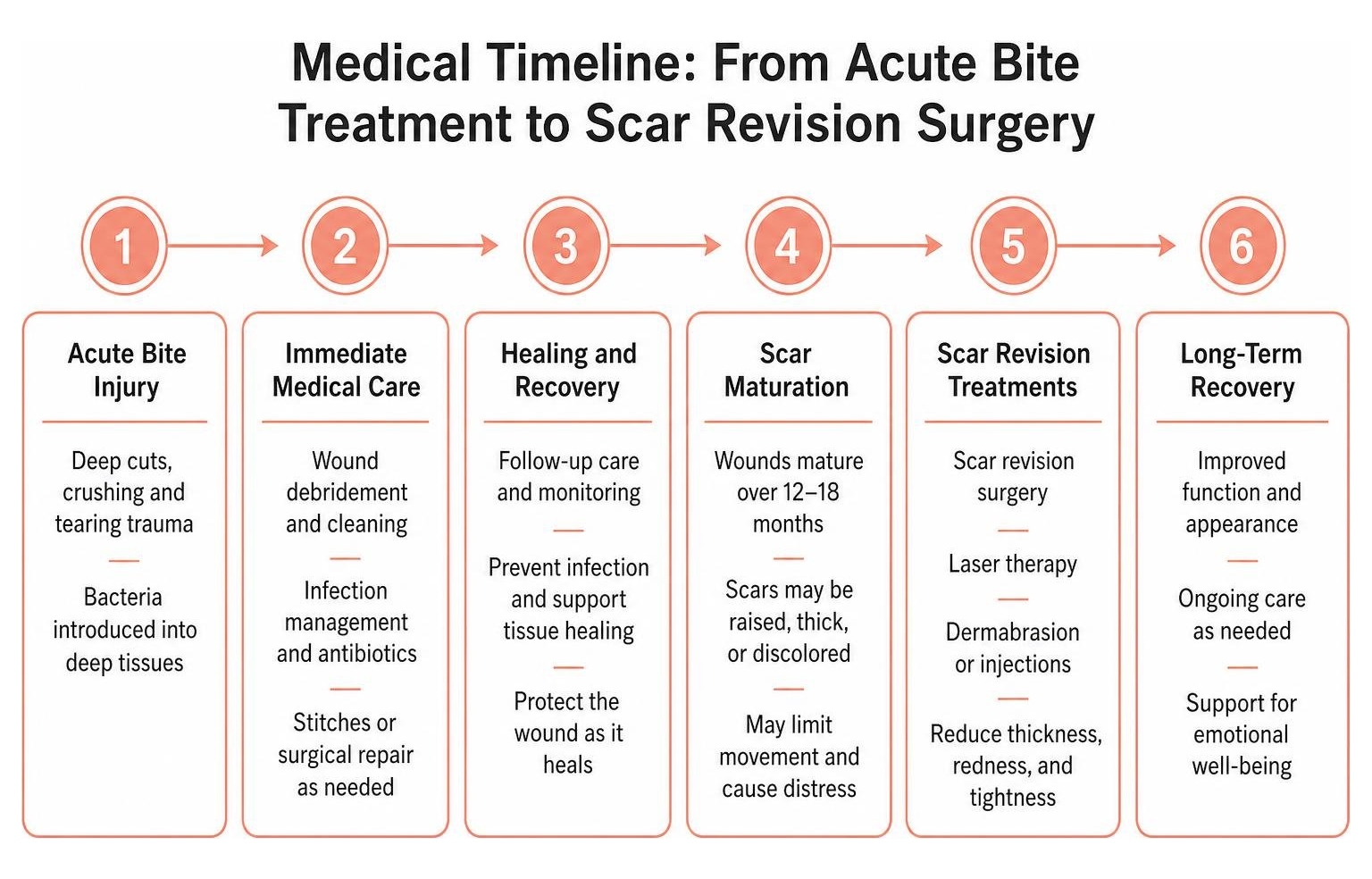
Initial treatment for serious dog bites requires immediate, aggressive medical intervention to prevent systemic infection and minimize long-term tissue destruction:
- Wound Debridement: Physicians must surgically excise dead, devitalized, or contaminated tissue from the wound margins to establish a clean foundation for healing.
- Infection Management: Canine saliva contains dangerous pathogens, notably Pasteurella multocida, Staphylococcus aureus, MRSA, and Capnocytophaga. Uncontrolled infections destroy healthy tissue margins, making clean surgical closure impossible and worsening final scar width.
- Surgical Repair and Grafting: Severe bites involving significant tissue avulsion require complex layered closures, skin grafts, or local tissue flaps to restore anatomical structure.
- Scar Revision and Laser Therapy: Once primary wounds mature—often a process taking twelve to eighteen months—victims frequently require secondary scar revision procedures, dermabrasion, corticosteroid injections, or pulsed-dye laser sessions to reduce visible erythema and scar thickness.
Why You Need a Lyndhurst Dog Bite Attorney for Child Facial Injuries
Children under the age of 10 sustain dog bites at the highest rates of any demographic group. Due to their height and natural curiosity, children are disproportionately bitten on the face, lips, cheeks, neck, and scalp.
Pediatric dog bites carry unique clinical and legal complications:
- Facial Growth Disruption: Facial lacerations across growth zones in a child can interfere with normal bone and cartilage development, necessitating multiple staged reconstructive surgeries as the child grows into adolescence.
- Psychological Trauma: Severe animal attacks often induce severe post-traumatic stress disorder (PTSD), sleep disturbances, separation anxiety, and cynophobia (fear of dogs), requiring dedicated pediatric psychotherapy.
- Statute Tolling Protections: While adults face standard statutory filing deadlines, the statute of limitations for minors injured in New Jersey is tolled (paused) until their 18th birthday. However, waiting years to take action can result in lost evidence, missing witnesses, and faded memories.
- Friendly Hearings (Minor Settlements): Any settlement involving a minor must undergo judicial review and approval through a formal “friendly hearing” to ensure funds are safely preserved in court-supervised, interest-bearing trusts or structured annuities until the child reaches adulthood.
When to Retain a Lyndhurst Dog Bite Attorney for Permanent Scars
Navigating the financial fallout of an animal attack requires understanding how state liability principles protect victims. In New Jersey, dog bite liability is governed by strict liability statutes. Under N.J.S.A. 4:19-16, the owner of a dog is liable for bite injuries suffered by an individual who is lawfully on public or private property, regardless of whether the dog had ever previously displayed viciousness or whether the owner knew of such tendencies.
This eliminates the archaic “one-bite rule” used in some jurisdictions. You do not need to prove the owner acted carelessly or knew their pet was dangerous. The primary burden involves proving the bite occurred while you were lawfully on the premises.
How a Lyndhurst Dog Bite Attorney Proves Maximum Claim Value
Insurance adjusters regularly minimize scar-related claims by categorizing them as mere superficial injuries. Proving the true value of a permanent scar requires demonstrating both the economic impact and the subjective non-economic harm:
- Future Medical Calculations: Obtaining formal evaluations from board-certified plastic surgeons detailing the estimated costs, procedures, anesthesia fees, and recovery periods needed for future revisions.
- Disfigurement and Visibility: Scars on the face, neck, and hands carry higher non-economic value due to their constant visibility and societal impact.
- Functional Impairment: Scars traversing joints or facial muscles can cause contractures that limit range of motion or impede natural facial expressions.
- Psychological Impact: Documenting emotional distress, altered social confidence, depression, and lifestyle modifications through psychiatric notes and personal impact statements.
Understanding how to choose a dog bite claim attorney in passaic county and neighboring Bergen County ensures your legal representation knows how to document these complex physical and psychological factors effectively.
Overcoming Property Owner and Insurer Defenses
Insurance carriers protect their bottom line by asserting statutory defenses to avoid or reduce payouts. The two primary statutory defenses under strict liability are:
- Trespassing: The victim was unlawfully on private property without express or implied permission.
- Provocation: The victim engaged in deliberate actions that provoked the animal into attacking.
Insurers also attempt to introduce comparative negligence arguments or scour policy exclusion clauses—such as specific breed exclusions or intentional act clauses—to deny coverage. An experienced attorney dismantles these arguments by gathering surveillance footage, establishing lawful presence through mail delivery, social invitation, or utility work, and confirming all applicable homeowner, renter, or commercial umbrella insurance policies.
How to Build and Prove a Severe Dog Bite Claim
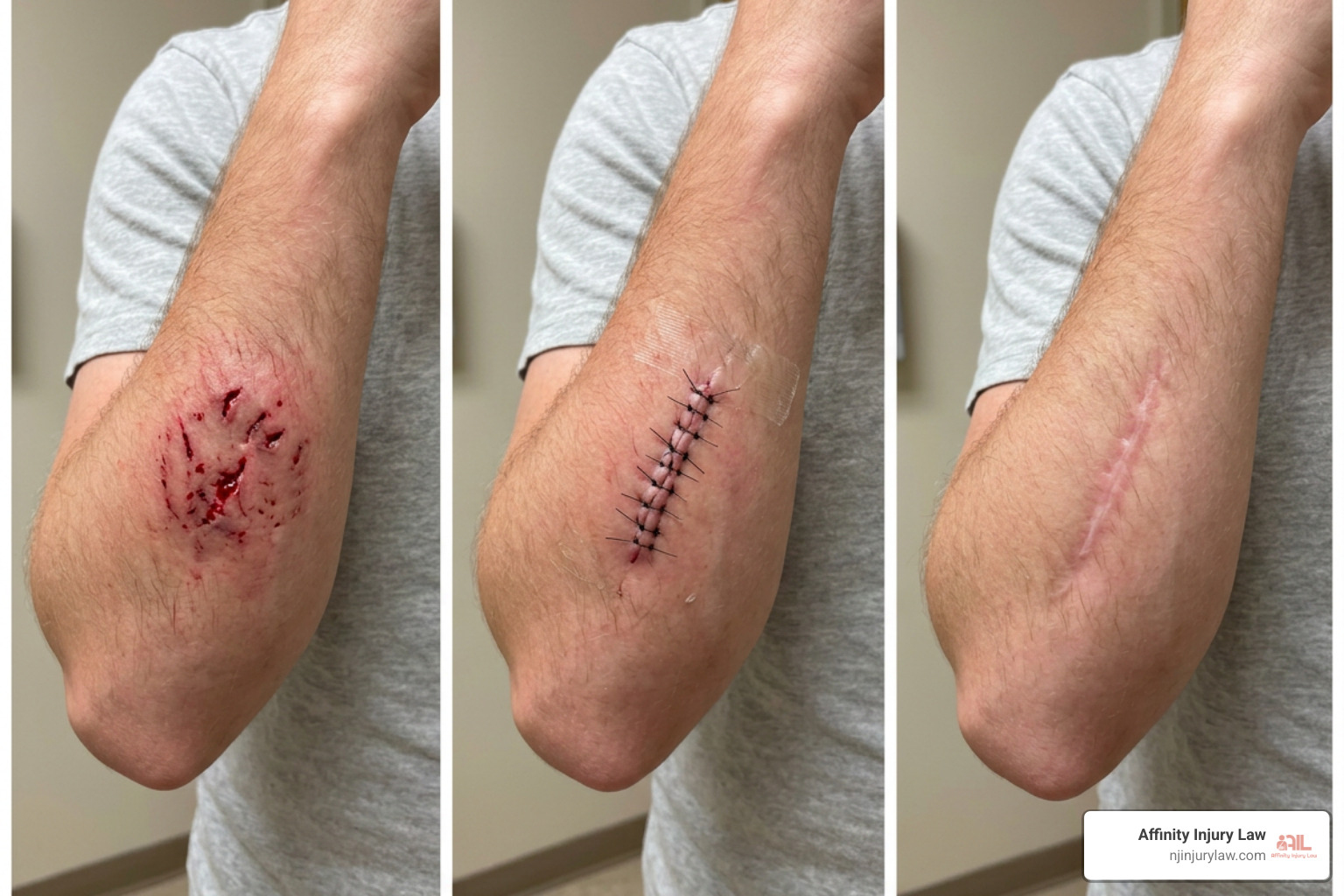
Building a successful injury claim requires meticulous documentation from the moment the incident occurs.
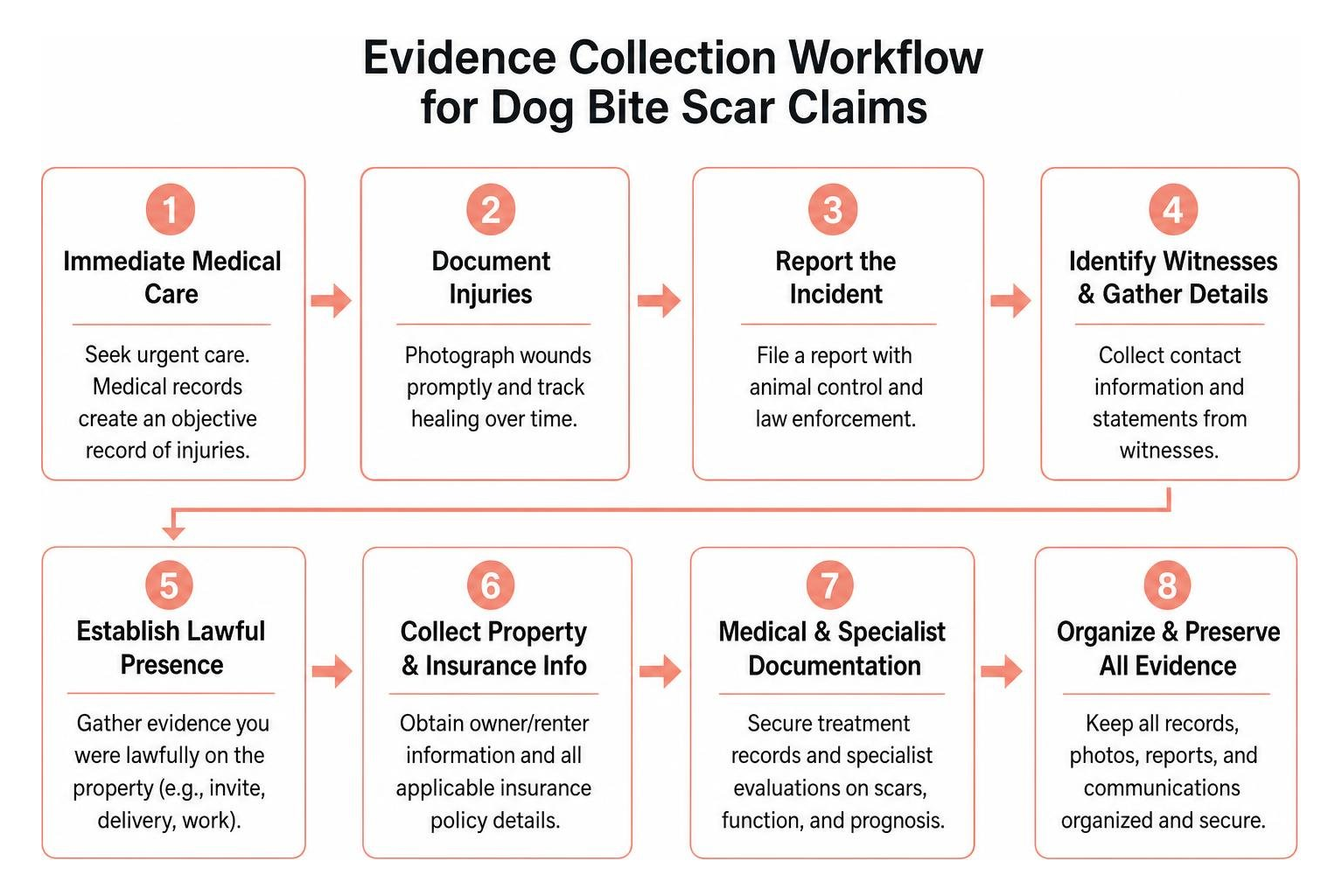
Immediate Evidence Collection and Medical Care Protocol
If you or a family member is attacked by a dog in Lyndhurst, take the following immediate steps:
- Seek Urgent Medical Attention: Go to an emergency department or urgent care facility immediately. Beyond wound stabilization, medical documentation creates an objective, contemporaneous record of your initial injuries.
- Identify the Dog and Owner: Obtain the owner’s full name, residential address, contact details, and homeowner or renter insurance policy information.
- Report the Incident: Contact the Lyndhurst Health Department and local animal control authorities. Official animal control reports confirm rabies vaccination statuses, create municipal bite records, and establish an evidentiary paper trail. If you are handling an incident in neighboring municipalities, review how to file a dog bite claim with a bergen county attorney to ensure local reporting compliance.
- Photograph Everything: Take clear, high-resolution photographs of the attack location, torn clothing, bloody garments, the dog (if safe to do so), and all bite wounds before and after initial sutures.
- Maintain Healing Logs: Document wound progression every week. Scar tissue continually changes color and texture over 12 to 24 months; photographic timelines provide proof of permanent disfigurement.
- Do Not Provide Recorded Statements: Politely decline interviews or recorded statements requested by the dog owner’s insurance adjuster until you have consulted legal counsel.
Calculating Economic and Non-Economic Damages
Valuing a dog bite injury claim requires itemizing all current and future damages:
| Expense / Impact Category | Short-Term Management (Months 0–6) | Long-Term Management (Years 1+) |
|---|---|---|
| Direct Medical Costs | Emergency room care, IV antibiotics, primary suturing, initial surgeon fees | Staged scar revisions, laser resurfacing, dermabrasion, steroid injections |
| Prescriptions & Supplies | Oral antibiotics, pain medication, topical ointments, daily sterile dressings | Medical-grade silicone scar sheets, sun protection, specialized dermatological creams |
| Rehabilitation & Therapy | Physical therapy for underlying soft-tissue tears or nerve impingement | Ongoing psychological counseling, cognitive behavioral therapy for PTSD |
| Financial Losses | Immediate missed work hours, lost hourly wages, used sick leave | Reduced earning capacity due to functional impairment or visible disfigurement |
| Non-Economic Impact | Acute pain, physical discomfort, sleep disturbances, acute shock | Permanent disfigurement, embarrassment, chronic anxiety, lifestyle changes |
Frequently Asked Questions About Dog Bite Injuries in Lyndhurst
Is a dog owner automatically liable for bite scars?
In New Jersey, dog owners are strictly liable under N.J.S.A. 4:19-16 for bite wounds and resulting scars if the victim was in a public place or lawfully on private property. The injured party does not need to prove that the owner was careless or that the animal had a history of vicious behavior.
Liability attaches automatically unless the insurer proves an exception, such as unlawful trespassing or direct provocation.
What is the deadline to file a scar injury claim for a minor?
For adults, the statute of limitations for personal injury claims in New Jersey is generally two years from the date of the bite.
However, for minors under 18 years of age, the statutory clock is tolled until they turn 18. This gives them until their 20th birthday to file a lawsuit. Despite this extension, it is best to secure evidence, witness testimonies, and animal control reports promptly after the incident occurs.
Will the dog owner have to pay settlement costs out of pocket?
In the vast majority of dog bite cases, compensation is paid by the dog owner’s homeowner, renter, or landlord liability insurance policy, or an umbrella insurance policy.
Personal assets are typically only targeted if the owner lacks adequate coverage or if damages exceed the insurance policy limits.
Conclusion
Severe bite scars leave lasting physical, psychological, and financial impacts. At Affinity Injury Law, we provide dedicated legal representation on a contingency-fee basis—meaning you owe no legal fees unless we successfully recover compensation for your injuries. Our team provides responsive, multilingual support to ensure clear communication throughout your claim.
If you or your child suffered a severe dog bite, contact our team today for a free consultation. Learn more about our comprehensive Passaic County personal injury legal representation and legal services across North Jersey to protect your rights and pursue the full recovery you deserve.