


What a Lyndhurst Catastrophic Injury Lawyer Can Help You Recover
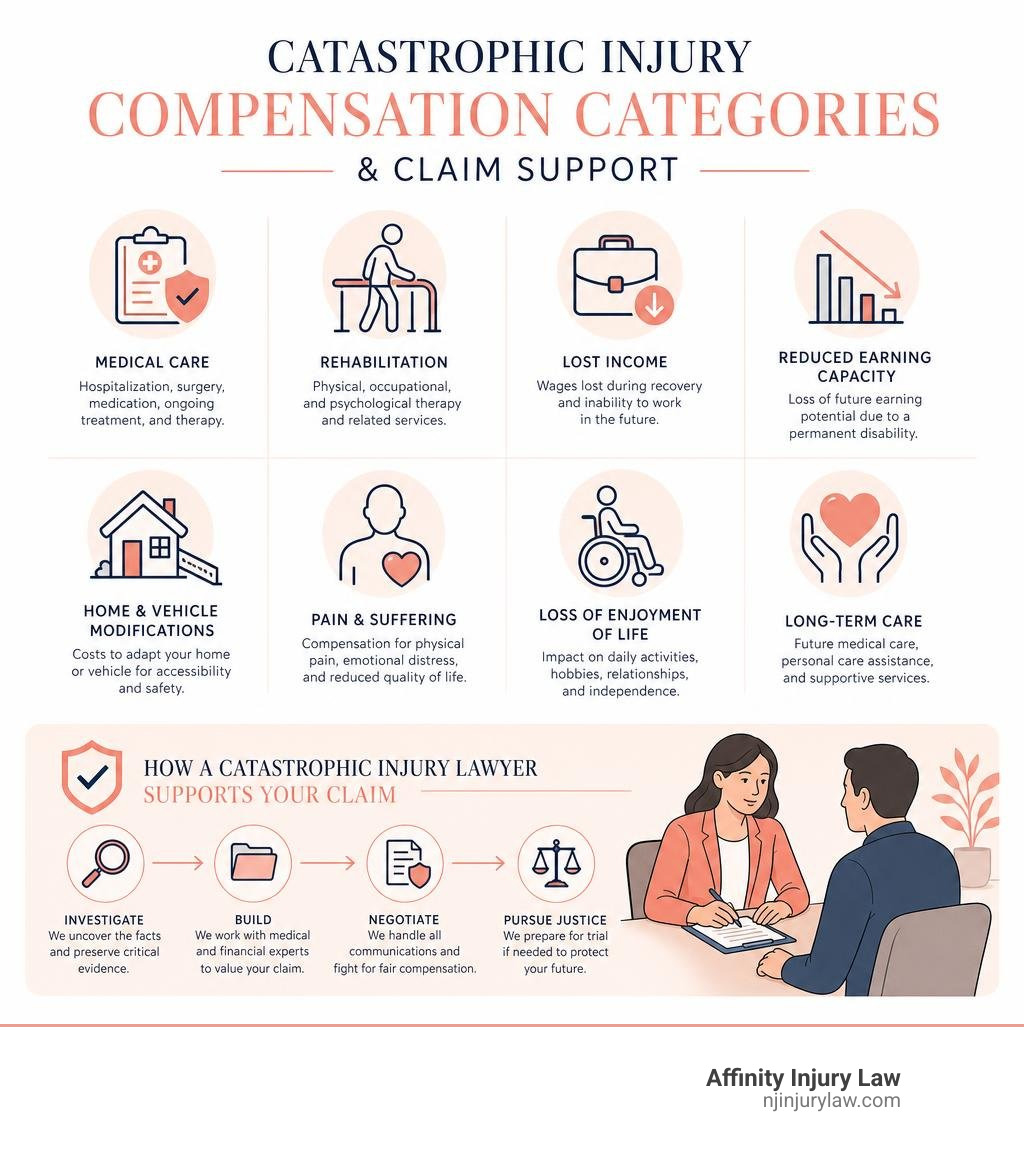
A Lyndhurst catastrophic injury lawyer can pursue compensation that reflects both your current losses and the care you may need for years to come. This may include medical treatment, rehabilitation, lost income, reduced earning ability, home or vehicle changes, pain and suffering, and the impact a permanent disability has on daily life.
Catastrophic injuries often involve severe brain trauma, spinal cord damage, major burns, amputations, or other injuries that permanently change a person’s independence or ability to work. After an accident, insurance companies may push for a quick settlement before the full cost of your care is clear. A lawyer can investigate what happened, preserve evidence, work with medical and financial experts, and seek a recovery based on the real long-term effects of the injury.
Ioana Enescu, Esq. is a founding member of Affinity Injury Law and an advocate for injured people seeking the medical care and legal support they need. As a Lyndhurst catastrophic injury lawyer resource, she brings a client-centered approach informed by her background in law and her understanding of the importance of quality medical attention.
Explore more about lyndhurst catastrophic injury lawyer:
Understanding What Qualifies as a Catastrophic Injury

A catastrophic injury is not an everyday scrape, sprain, or broken bone that mends within a few weeks. In the legal and medical worlds, a catastrophic injury refers to severe, life-altering trauma that permanently prevents an individual from performing gainful work or leaves them with lasting, profound physical or cognitive impairments.
These severe conditions fundamentally alter the trajectory of a victim’s life and place substantial emotional and financial pressure on their entire household. When we represent individuals facing permanent injuries, our goal is to ensure that the compensation pursued accounts for an entire lifetime of needs rather than just immediate hospital bills.
Catastrophic harm typically falls into several distinct categories:
- Spinal Cord Trauma: Damage to the spinal column often causes partial or total paralysis. Victims suffering spinal cord trauma may experience paraplegia or quadriplegia, requiring round-the-clock personal assistance, mobility equipment, and specialized ongoing medical treatment.
- Severe Brain Trauma: Traumatic brain injuries (TBIs) disrupt cognitive processing, memory, motor function, and emotional regulation. Victims suffering severe brain injuries frequently require continuous supervision, cognitive rehabilitation, and extensive physical therapy.
- Severe Burns and Disfigurement: Third- and fourth-degree burn injuries cause extreme nerve damage, extensive tissue loss, and permanent scarring. Debilitating burn injuries often necessitate dozens of reconstructive surgeries, skin grafts, and lifelong infection management.
- Traumatic Amputations: The accidental loss of a limb leads to immense physical adjustment, prosthetic replacements, phantom limb pain management, and occupational adjustments.
- Multiple Complex Fractures and Internal Organ Damage: Crushing injuries that impair internal organs or damage skeletal structures beyond complete surgical repair, resulting in permanent disability.
Common Causes of Severe Trauma in Lyndhurst
Catastrophic events happen in an instant, often along busy New Jersey corridors or complex industrial work environments. Our legal team regularly examines serious accidents stemming from:
- Motor Vehicle Collisions: High-speed car crashes on busy routes like Route 3, Route 17, or the New Jersey Turnpike can generate severe kinetic force, leading to devastating bodily trauma.
- Commercial Trucking Incidents: The massive size disparity between passenger vehicles and tractor-trailers means commercial truck collisions frequently cause profound, life-altering injuries to motorists.
- Motorcycle Wrecks: Without the physical barrier of a vehicle frame, riders involved in motorcycle accidents are vulnerable to severe road rash, spinal compression, and head trauma.
- Industrial and Building Site Incidents: Heavy machinery, structural collapses, scaffolding failures, and electrical hazards result in severe construction accidents throughout Bergen County and Passaic County.
- Clinical and Surgical Errors: Severe diagnostic delays, surgical mistakes, birth trauma, and pharmaceutical oversights fall under medical malpractice, leaving patients with irreversible health complications.
- Workplace Hazards: High-impact workplace mishaps require dedicated legal advocacy through both personal injury lawsuits and workers compensation claims when third-party negligence is involved.
- Defective Products: Flawed mechanical parts or hazardous consumer products that cause injury can form the basis of a product liability claim against manufacturers and distributors.
- Premises Incidents: Hazardous walkways or dangerous commercial properties leading to high-impact slip and fall trauma.
Types of Compensation Available in Catastrophic Injury Claims
When dealing with a catastrophic injury, calculating damages requires an extensive evaluation of both tangible monetary losses and personal, non-tangible suffering. Because catastrophic harm creates long-term needs, damages must cover both past expenses and projected future costs.
| Damage Category | Economic Damages | Non-Economic Damages |
|---|---|---|
| Definition | Objective, verifiable financial costs directly resulting from the injury. | Subjective, non-monetary losses impacting quality of life and physical well-being. |
| Key Examples | Emergency medical bills, future hospital stays, surgeries, physical therapy, lost wages, diminished earning capacity, medical supplies. | Physical pain and suffering, emotional distress, mental anguish, loss of enjoyment of life, physical disfigurement, permanent impairment. |
| Calculation Method | Supported by receipts, invoices, tax records, life care plans, and vocational economic models. | Assessed through medical narratives, daily journals, family testimony, and severity benchmarks. |
| Accommodations | Home accessibility renovations (ramps, widened doorways, lifts), wheelchair-accessible vehicles. | Loss of consortium, loss of companionship, and loss of parental guidance. |
How a Lyndhurst Catastrophic Injury Lawyer Calculates Life-Care Costs
Accurately evaluating a catastrophic injury claim is not a matter of guesswork. It requires a detailed projection of what care will cost over several decades. When insurance companies make initial settlement offers, they routinely omit critical long-term considerations such as the replacement of medical hardware, rising prescription costs, and ongoing home health assistance.
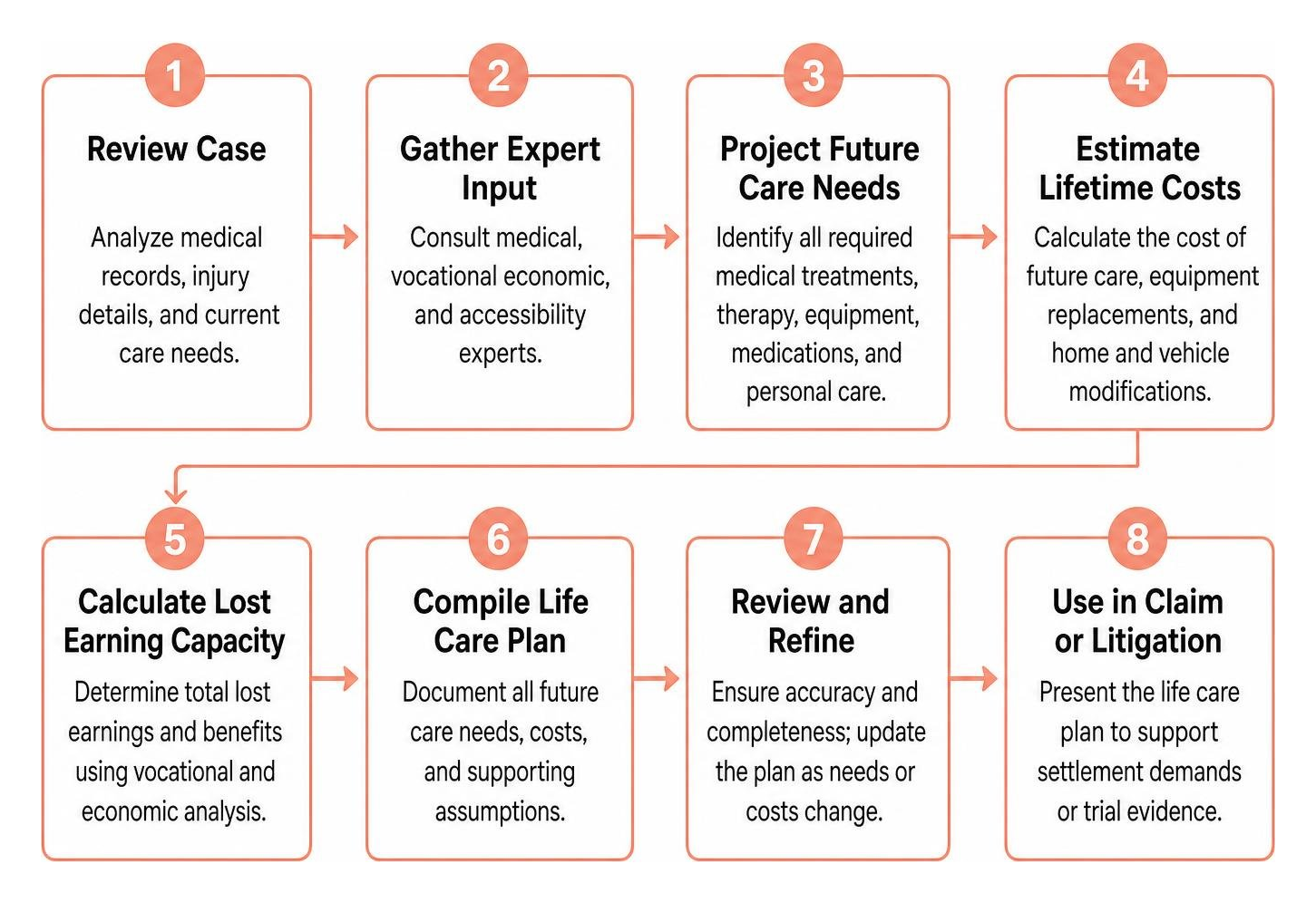
To establish an accurate figure, we consult leading industry experts:
- Certified Life Care Planners: These specialists formulate a complete blueprint documenting every future medical intervention the injured party will require. This includes routine doctor visits, physical and occupational therapy sessions, surgical procedures, durable medical equipment, prescription medications, and personal nursing care.
- Vocational and Economic Experts: When severe injuries prevent a client from returning to their prior trade or entering the workforce entirely, economic specialists quantify total lost earning capacity. They adjust for standard inflation, wage trajectory, lost retirement contributions, and employment benefits across the individual’s working life expectancy.
- Architectural and Accessibility Consultants: Catastrophic trauma often necessitates home renovations, such as installing wheelchair ramps, roll-in showers, specialized lifts, and modifying family vehicles to maintain mobility and dignity.
Proving Fault and Legal Liability Under Comparative Negligence Rules

Securing compensation in a catastrophic injury lawsuit requires establishing legal fault. Proving negligence requires demonstrating four essential components:
- Duty of Care: The defendant owed a legal obligation to act with reasonable caution (e.g., a motorist obeying traffic regulations, or a property manager maintaining safe premises).
- Breach of Duty: The defendant failed to uphold that obligation through careless, reckless, or intentional conduct.
- Proximate Causation: This specific breach directly caused the catastrophic accident and resulting bodily harm.
- Actual Damages: The victim suffered tangible injuries, financial costs, and emotional distress as a consequence.
In New Jersey, personal injury cases operate under a modified comparative negligence standard. Under this legal framework, an injured person can recover damages as long as their share of liability is not greater than the combined negligence of the defendants (50% or less). If you are assigned a portion of fault, your overall financial recovery is reduced proportionally.
For instance, if a court determines that total damages amount to $2,000,000, but finds the injured plaintiff was 10% responsible for the event, the final payout would be adjusted to $1,800,000. Understanding these comparative fault considerations is essential when building a strong case, as detailed in The Ultimate Guide to Lyndhurst Accident Claims and Legal Representation.
Critical Evidence Required for Catastrophic Claims
Building a well-supported claim requires gathering and securing key evidence before it can be lost or altered. In severe injury litigation, our team collects and analyzes:
- Scene Documentation: High-resolution photographs and video footage of the incident location, road hazards, machinery defects, or structural flaws.
- Digital Data: Dashcam footage, private surveillance recordings, municipal traffic cameras, and vehicle Event Data Recorders (“black boxes”).
- Commercial Records: Truck driver electronic logging devices (ELDs), dispatch logs, maintenance histories, and corporate safety records.
- Official Reports: Police incident reports, OSHA workplace investigation findings, and municipal citations.
- Comprehensive Medical Records: Diagnostic scans (MRIs, CT scans, X-rays), surgical operation summaries, trauma team evaluations, and rehabilitation charts.
- Eyewitness and Expert Depositions: Recorded, sworn statements from eyewitnesses, accident reconstructionists, biomechanical engineers, and medical practitioners.
The Legal Process and Deadlines with a Lyndhurst Catastrophic Injury Lawyer
The journey toward securing a fair recovery for a catastrophic injury follows a structured legal pathway:
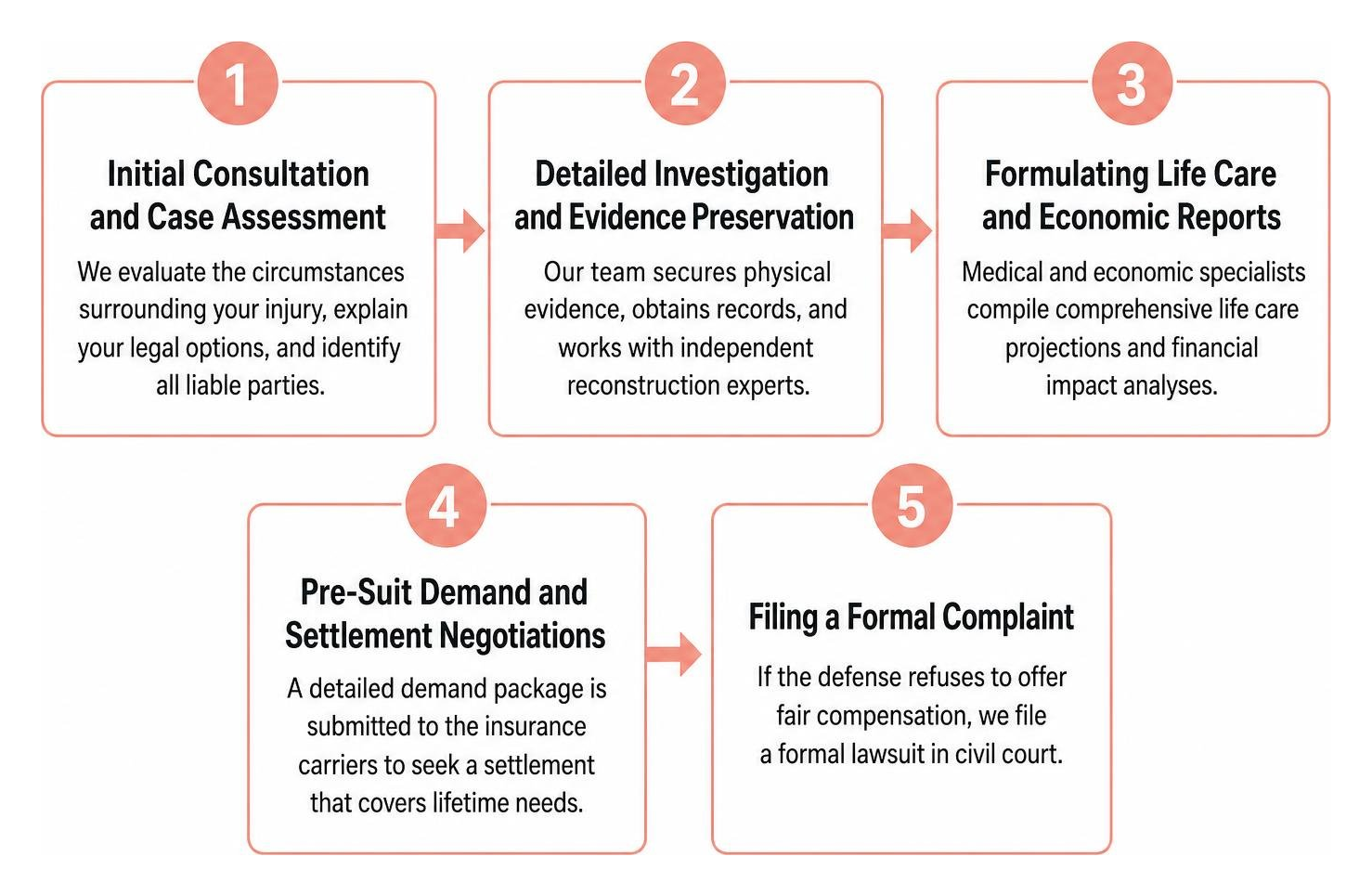
- Initial Consultation and Case Assessment: We evaluate the circumstances surrounding your injury, explain your legal options, and identify all liable parties.
- Detailed Investigation and Evidence Preservation: Our team secures physical evidence, obtains records, and works with independent reconstruction experts.
- Formulating Life Care and Economic Reports: Medical and economic specialists compile comprehensive life care projections and financial impact analyses.
- Pre-Suit Demand and Settlement Negotiations: A detailed demand package is submitted to the insurance carriers to seek a settlement that covers lifetime needs.
- Filing a Formal Complaint: If the defense refuses to offer fair compensation, we file a formal lawsuit in civil court.
- Discovery Phase: Both legal teams exchange documents, review written interrogatories, and conduct depositions of witnesses and experts.
- Mediation or Trial Advocacy: While many matters resolve through structured alternative dispute resolution, we prepare every case to stand before a jury if the opposing party refuses to provide fair compensation. If the injury tragically results in loss of life, we also represent families in wrongful death proceedings.
Under New Jersey law, the statute of limitations for filing a personal injury claim is generally two years from the date the injury occurred. Failing to initiate formal legal action within this statutory timeframe typically bars the injured party from ever recovering financial compensation. When managing complex claims involving governmental entities, even shorter notice requirements (such as filing a Title 59 Notice of Tort Claim within 90 days) apply.
Working with a Lyndhurst Catastrophic Injury Lawyer on a Contingency Basis
Managing the day-to-day realities of a catastrophic injury creates immense personal and financial stress. Injured victims should never have to worry about how to afford experienced legal representation.
Affinity Injury Law operates on a contingency fee structure. This means:
- Zero Upfront Payments: You pay no retainers or out-of-pocket costs to initiate your case.
- Litigation Costs Covered: We advance the resources required to hire accident reconstructionists, medical specialists, life care planners, and economic analysts.
- No Fee Unless We Win: Our legal fees are collected exclusively as an agreed-upon percentage of the final settlement or jury verdict we secure on your behalf. If we do not obtain a recovery for you, you owe us nothing in attorney fees.
Choosing the right firm is an important first step. For more details on what to look for, read our guide on Finding the Best Lyndhurst Injury Law Office for Your Free Consultation.
Frequently Asked Questions About Catastrophic Injury Claims
What is the deadline to file a catastrophic injury lawsuit?
In New Jersey, the standard statute of limitations for personal injury lawsuits is two years from the date the accident occurred. While limited exceptions exist—such as cases involving minors or delayed discovery of harm—waiting too long can compromise your claim. Crucial physical evidence can disappear, surveillance tapes get recorded over, and witnesses’ memories fade. Initiating the legal process early allows your legal team to preserve essential evidence and consult medical experts promptly.
How does shared fault affect my compensation?
New Jersey adheres to a modified comparative negligence rule with a 50% bar. Under this statute, an injured plaintiff can recover financial damages as long as their level of responsibility is 50% or less.
If you are found to bear partial responsibility for the accident, your ultimate financial award will be decreased by your percentage of fault. For example, if a jury determines your total losses are $1,000,000 but assigns you 20% of the fault, your recovery will be $800,000. If your fault exceeds 50%, you are barred from receiving any compensation from the other party.
Can family members recover damages in catastrophic injury cases?
Yes. Catastrophic trauma impacts not only the injured person, but their immediate family members as well. Under New Jersey law, spouses can pursue a legal claim known as “loss of consortium.” This claim seeks financial compensation for the loss of companionship, affection, emotional support, and marital relations caused by the injury.
Additionally, family members who leave their careers to provide full-time, direct caregiver support can factor those practical losses and caregiving needs into the overall life-care and economic compensation plan.
Conclusion
A catastrophic injury creates lifelong challenges that require substantial, long-term financial resources. Securing fair compensation demands thorough preparation, clear evidence, and experienced legal guidance.
At Affinity Injury Law, we advocate for injured individuals across Lyndhurst, Hackensack, Paterson, Passaic, Clifton, and the surrounding communities of Bergen and Passaic Counties. With extensive multilingual support, our team ensures that you and your family can communicate comfortably throughout your claim.
If you or a family member is dealing with a severe accident, reach out to our Personal Injury Lawyers New Jersey team today. We offer clear, step-by-step guidance and work on a contingency fee basis, so you pay nothing unless we secure compensation for you. Contact Us today to schedule your free consultation.