

How a Lyndhurst Injury Case Lawyer Can Help After an Accident
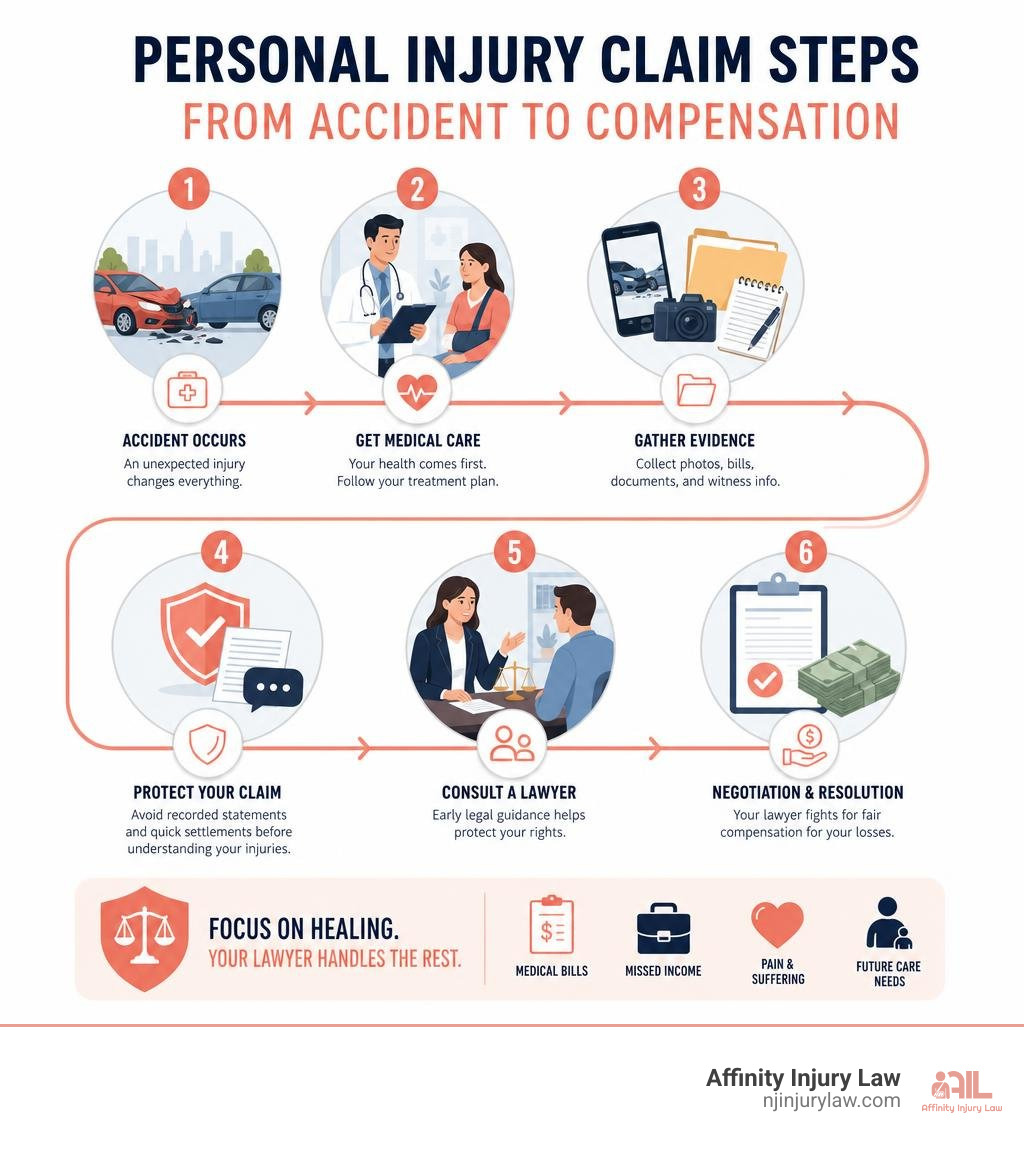
A Lyndhurst injury case lawyer can take over the legal and insurance work after an accident so you can focus on medical care. They can investigate what happened, preserve evidence, identify responsible parties, calculate your losses, and negotiate for compensation for medical bills, missed income, and pain and suffering.
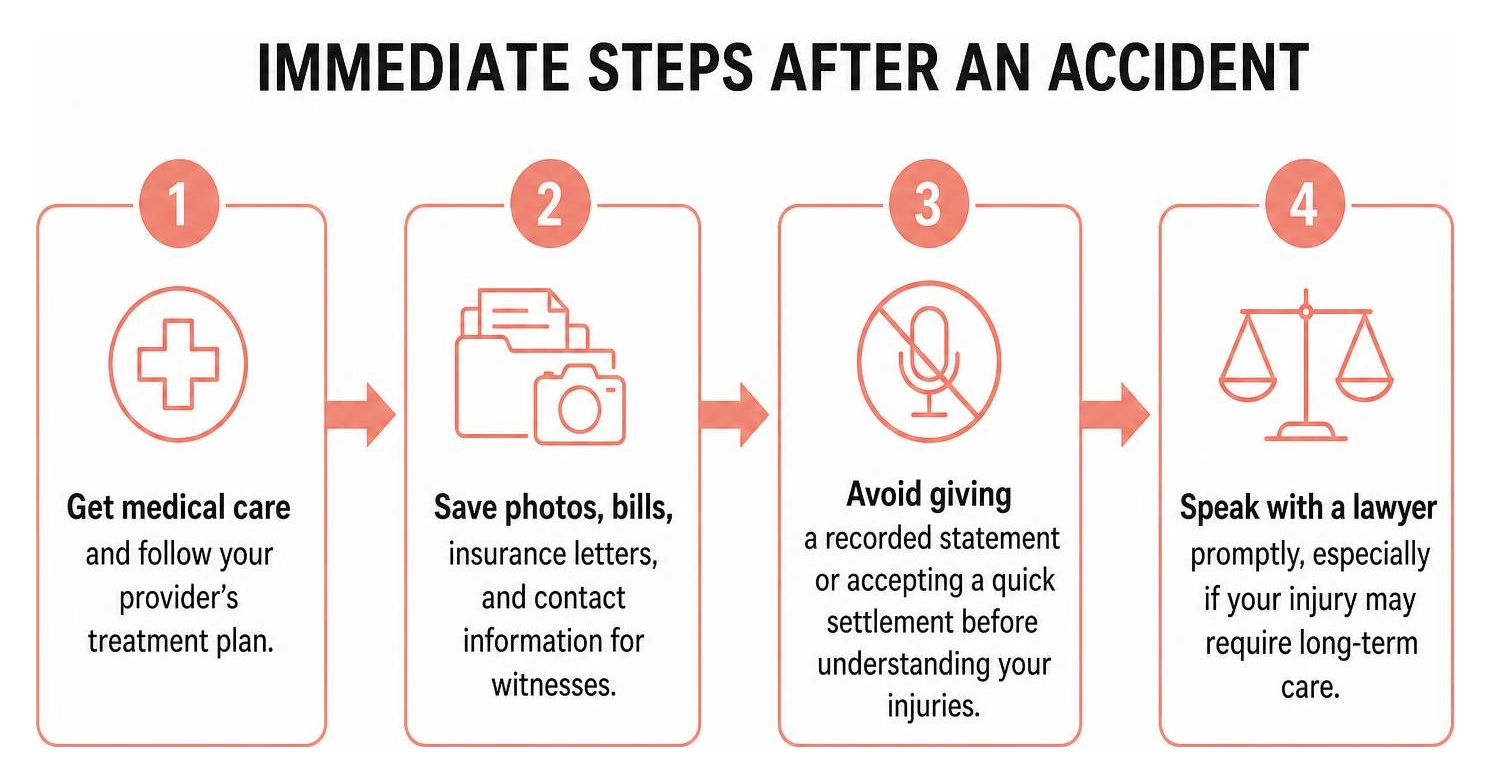
After a serious accident, take these steps early:
- Get medical care and follow your provider’s treatment plan.
- Save photos, bills, insurance letters, and contact information for witnesses.
- Avoid giving a recorded statement or accepting a quick settlement before understanding your injuries.
- Speak with a lawyer promptly, especially if your injury may require long-term care.
This matters most in catastrophic injury claims, including spinal cord trauma. A claim may need to account for future rehabilitation, assistive equipment, home or vehicle changes, lost earning ability, and long-term personal care – not just the bills already in hand.
I am Ioana Enescu, Esq., a founding member of Affinity Injury Law and a New Jersey attorney focused on helping injured people seek the care and financial recovery they need. As a Lyndhurst injury case lawyer, I bring a client-first approach shaped by my legal advocacy work and my understanding of the medical issues that often follow a serious accident.
Lyndhurst injury case lawyer vocabulary:
When to Hire a Lyndhurst Injury Case Lawyer for Severe Accidents
Severe accidents can alter the course of a life in an instant. Whether you were struck along Route 17, injured in a commercial delivery collision near Route 3, or hurt on a hazardous property, dealing with insurers while healing is overwhelming. Motor vehicle accidents represent nearly 40% of all catastrophic trauma claims, especially severe spine and brain injuries, but severe harm also stems from slip and fall incidents, construction hazards, industrial machinery failures, and medical malpractice.

Hiring legal counsel right away ensures that your rights remain protected before critical evidence vanishes. Navigating local roadways and municipal processes requires specific insight, which is why Bergen County injury claims need local context when proving negligence against stubborn insurance carriers. In our comprehensive Lyndhurst accident claims guide, we outline how prompt legal intervention prevents insurance adjusters from exploiting your vulnerability during early recovery.
Immediate Steps to Protect Your Injury Claim
The actions you take immediately following a traumatic event lay the foundation for your legal recovery. Insurance adjusters review your initial timeline looking for any gap or inconsistency they can use to lower your payout.
To protect your health and your legal rights:
- Seek Emergency Medical Attention: Always let paramedics examine you. Shock and adrenaline mask severe internal injuries, concussions, and spinal trauma. Immediate hospital records establish direct causation between the crash and your physical injuries.
- Report the Incident: Contact local police immediately to create an official accident report. For workplace or commercial property incidents, ensure site managers file an incident report and request a physical copy.
- Document the Scene Thoroughly: Capture photos and video footage of vehicle damage, road conditions, skid marks, lighting, property hazards, and visible physical injuries.
- Collect Eyewitness Details: Obtain names, phone numbers, and statements from anyone who witnessed the accident before they leave the scene.
- Preserve Medical and Financial Records: Retain every diagnostic image, discharge paper, prescription receipt, and record of lost work time.
- Refrain from Giving Recorded Statements: Do not provide recorded explanations to third-party insurance representatives until you consult an attorney.
Understanding Catastrophic Injuries and Spinal Cord Trauma
Catastrophic injuries create permanent, life-altering disruptions that prevent an injured individual from returning to gainful employment or performing basic daily living tasks. Among the most devastating are spinal cord injuries (SCIs), which disrupt communication between the brain and the peripheral nervous system.
The medical classification of a spinal cord injury dictates both the physical prognosis and the financial scope of a legal claim:
- High Tetraplegia / Quadriplegia (C1–C4): Damage to the upper cervical spine resulting in paralysis affecting the arms, hands, trunk, and legs. Victims often require 24/7 personal care and mechanical respiratory assistance.
- Low Tetraplegia / Quadriplegia (C5–C8): Cervical injuries that spare neck and some shoulder movement but cause loss of hand, wrist, trunk, and lower limb function.
- Paraplegia (T1–L5): Thoracic, lumbar, or sacral damage resulting in total or partial loss of function in the legs and lower abdomen, while preserving full arm and hand function.
- Complete vs. Incomplete Injuries: A complete spinal cord injury eliminates all sensation and voluntary motor function below the neurological level of the injury. An incomplete injury leaves intact some nerve pathways, allowing varying degrees of sensation or functional movement.
- Traumatic Neurological Syndromes: Incomplete spinal injuries can manifest as Central Cord Syndrome, Brown-Séquard Syndrome, or Anterior Cord Syndrome, each presenting unique motor deficits and long-term recovery paths.
While complete spinal cord injuries cannot currently be cured by modern medicine, individuals with incomplete trauma can achieve functional improvement through intensive, aggressive physical and occupational rehabilitation.
Calculating Compensation and Lifetime Damages in Catastrophic Injury Claims
Calculating the true value of a catastrophic injury claim requires looking decades into the future. Personal injury compensation falls into two primary categories: economic damages and non-economic damages.
Economic Damages:
- Past, current, and future medical treatment expenses
- Inpatient rehabilitation hospital stays and specialized physical therapy
- Prescription medications, adaptive medical devices, and custom motorized wheelchairs
- Home and vehicle accessibility modifications (ramps, widened doorways, roll-in showers, specialized vans)
- Lost earnings and loss of future earning capacity
- Attendant care, home health aides, and domestic assistance
Non-Economic Damages:
- Physical pain and suffering
- Emotional distress, anxiety, and depression
- Loss of enjoyment of life and inability to engage in former hobbies
- Loss of consortium and familial companionship
- Physical disfigurement and permanent disability
The financial impact of spinal cord injuries is staggering. The table below outlines average initial and lifetime medical costs based on neurological level and age at injury (projected for an individual injured at age 25):
| Injury Severity Level | First-Year Medical Costs | Estimated Lifetime Medical Costs |
|---|---|---|
| High Tetraplegia (C1–C4) | Over $1,100,000 | Over $5,100,000 |
| Low Tetraplegia (C5–C8) | ~$830,000 | ~$3,700,000 |
| Paraplegia (T1–L5) | ~$560,000 | ~$2,400,000 |
| Incomplete Motor Function (Any Level) | ~$375,000 | ~$1,600,000 |
Note: These figures reflect direct medical and adaptive living expenses and do not include lost wages, fringe benefits, or non-economic pain and suffering.
How a Lyndhurst Injury Case Lawyer Calculates Catastrophic Lifetime Damages
Initial medical bills represent only a small fraction of what a catastrophically injured victim will need across their lifespan. To capture every future expense, we work with certified life-care planners, vocational specialists, and forensic economic experts.
A comprehensive life-care plan evaluates:
- Future Surgical and Inpatient Care: Anticipated procedures, hardware revisions, and management of secondary complications (such as pressure sores, respiratory infections, and urinary tract complications).
- Lifetime Attendant Care Needs: Determining whether the individual requires 8, 12, or 24-hour daily skilled nursing care or home health assistance.
- Durable Medical Equipment Replacement Schedules: High-end power wheelchairs, transfer lifts, and respiratory devices require servicing and replacement every 3 to 7 years.
- Vocational Loss Calculations: Economists calculate total lost lifetime earnings, factoring in inflation, career advancement trajectories, retirement contributions, and lost health insurance benefits.
Settlement Negotiations vs. Taking a Case to Trial
Insurance carriers understand the high value of catastrophic injury claims. Consequently, their adjusters and corporate defense attorneys fight these cases aggressively, often presenting early lowball offers before the full scope of a victim’s permanent disability is clear.
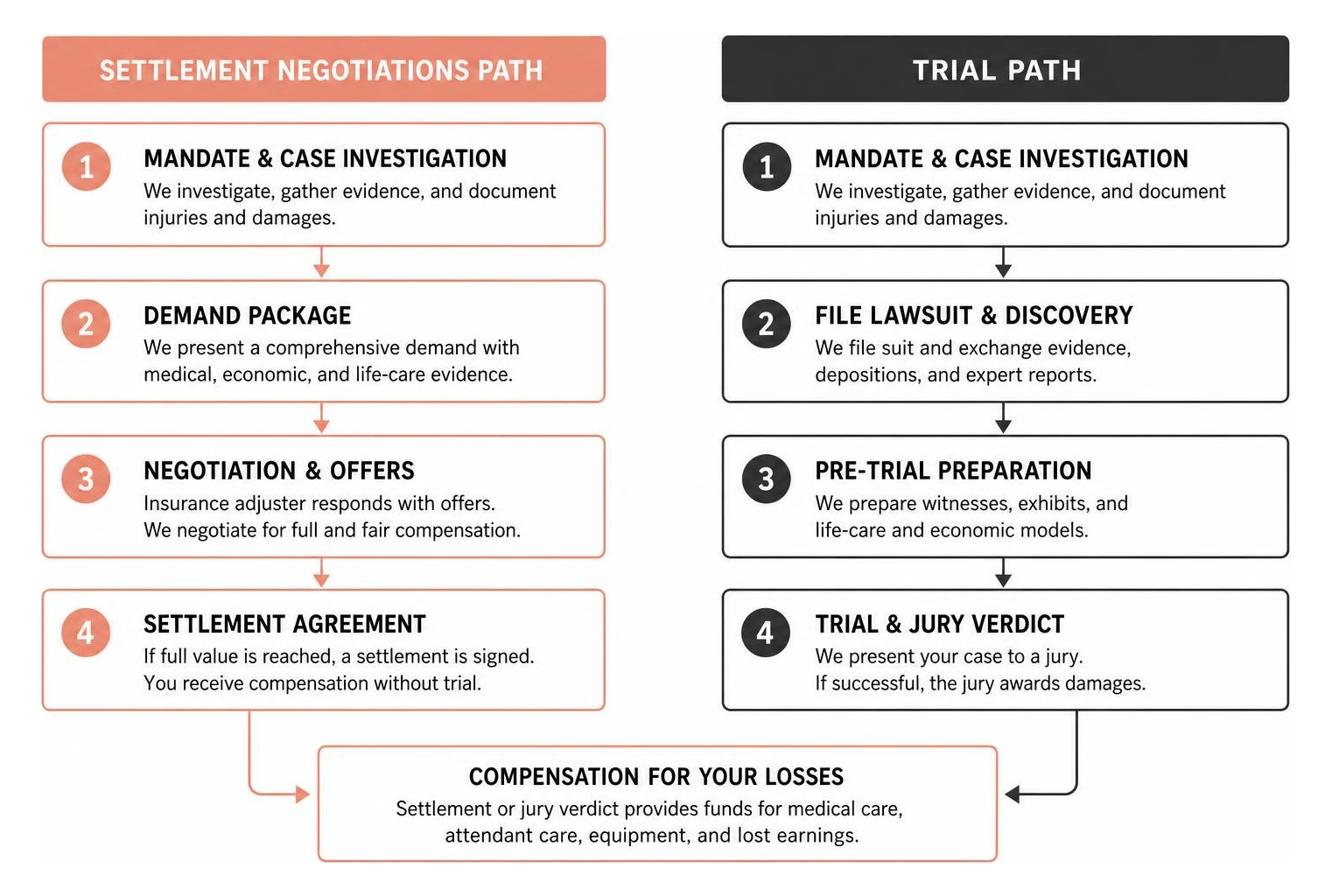
- Settlement Negotiations: A settlement is a legally binding agreement where the defendant or their insurer agrees to pay a negotiated lump sum or structured payout in exchange for dismissing the lawsuit. Settlements provide guaranteed funds without the risks or extended timelines of trial.
- Courtroom Verdicts: If the defense refuses to offer full value for future care needs, taking the case before a jury becomes necessary. A trial allows our legal team to present dynamic medical evidence, expert testimony, and life-care economic modeling to secure a jury verdict that reflects the true extent of your losses.
We prepare every catastrophic injury case for trial from day one. This thorough preparation shows insurance companies that we will not accept inadequate settlement offers.
How Legal Representation Works: Costs, Evidence, and Timelines
Understanding the practical and financial side of personal injury representation helps alleviate stress during a difficult time. Learn more about fee structures in our breakdown on how much does it cost to hire a Lyndhurst accident lawyer.
Personal injury claims operate entirely on a contingency fee basis. This means:
- You pay zero upfront fees to retain legal counsel.
- We cover all upfront litigation costs, including court filing fees, expert witness retainers, accident reconstruction simulations, and medical record retrieval.
- Our legal fee is a predetermined percentage deducted only after we successfully recover a financial settlement or trial verdict for you.
- If we do not recover compensation on your behalf, you owe us nothing in attorney fees.
The timeline to resolve a catastrophic claim varies depending on medical stability and liability disputes. Minor claims may settle in several months, but severe spinal trauma cases often require 12 to 24 months or longer. It is critical to reach Maximum Medical Improvement (MMI) before concluding a claim, ensuring all long-term medical complications are accounted for.
What to Look for When Choosing a Lyndhurst Injury Case Lawyer
Selecting the right attorney directly impacts the financial security of your family for decades to come. When evaluating legal representation, focus on these critical factors:
- Demonstrated Trial Experience: Does the attorney regularly litigate cases in court, or do they simply settle every claim quickly? Insurers offer higher settlements to lawyers known for going to trial.
- Catastrophic Injury Track Record: Handling a complex spinal cord or brain injury requires deep familiarity with neurological terminology, life-care planning, and forensic economic analysis.
- Personalized Attention: Choose a firm where dedicated attorneys manage your case directly rather than delegating essential legal work to administrative assistants.
- Multilingual Support: Clear communication is essential. At Affinity Injury Law, multilingual client support ensures you understand every step of your legal journey without language barriers.
Schedule a Lyndhurst injury law office free consultation to discuss your case in detail.
Overcoming Common Defense Challenges from Insurance Companies
Insurance companies protect their profits by attempting to limit payouts on high-stakes claims. Common defense tactics include:
- Disputing Liability and Comparative Fault: Under comparative negligence laws, defense adjusters often argue that you were partially responsible for the accident to reduce their payout proportionally.
- Arguing Pre-Existing Degenerative Conditions: Insurers routinely obtain historical medical records to claim your spinal trauma or back pain stemmed from pre-existing degenerative disc disease rather than the acute collision.
- Delay Tactics: Insurers may stall document exchanges and claim reviews, hoping financial pressure forces you to accept a lower offer.
- Surveillance and Social Media Scrutiny: Insurance investigators frequently monitor social media or hire private investigators to record you performing daily tasks, attempting to undermine your injury claims.
Our legal team counters these tactics with clear accident reconstruction, biomechanical medical testimony, and strict bad-faith insurance litigation practices.
Frequently Asked Questions About Lyndhurst Injury Claims
How much is a catastrophic spinal cord injury case worth in Lyndhurst?
Because spinal cord injuries cause lifelong disability, their legal value is among the highest of any personal injury claim. Case values routinely range from hundreds of thousands of dollars to multi-million dollar outcomes. The final amount depends on the injury severity (such as high tetraplegia versus incomplete paraplegia), the victim’s age, past and future medical costs, lost lifetime earnings, available insurance policy limits, and the degree of clear liability.
What is the deadline to file an injury lawsuit?
The statute of limitations for personal injury lawsuits in New Jersey is generally two years from the date of the accident. If you fail to file a lawsuit in civil court within this statutory window, you permanently lose your right to seek compensation.
Exceptions apply—such as claims involving municipal entities, which require a formal Notice of Tort Claim within 90 days—making early consultation essential.
Are there any upfront fees to hire personal injury legal representation?
No. At Affinity Injury Law, we handle injury claims on a strict contingency fee agreement. We advance all litigation costs, medical expert fees, and deposition expenses. You pay no out-of-pocket retainers or hourly rates; we are compensated solely as a percentage of the financial recovery we win for you.
Conclusion
A catastrophic accident brings heavy emotional and financial challenges, but you do not have to face them alone. Securing the compensation you need for lifelong medical care, accessible housing, and financial stability requires focused, trial-ready legal advocacy.
At Affinity Injury Law, we combine high-level catastrophic injury litigation with direct, compassionate client communication. Our team provides multilingual legal representation across Lyndhurst, Hackensack, Paterson, Fort Lee, Paramus, Fair Lawn, Passaic, Clifton, Wayne, and throughout Bergen and Passaic Counties.
If you or a loved one suffered a severe injury, contact our dedicated personal injury lawyers New Jersey today to protect your rights and secure your future.