

When a Loved One Is Harmed: What You Need to Know About Nursing Home Abuse Claims in New Jersey
Nursing home abuse claims in New Jersey give injured residents and their families a legal path to hold negligent facilities accountable — and recover compensation for the harm caused.
Here’s a quick overview of how it works:
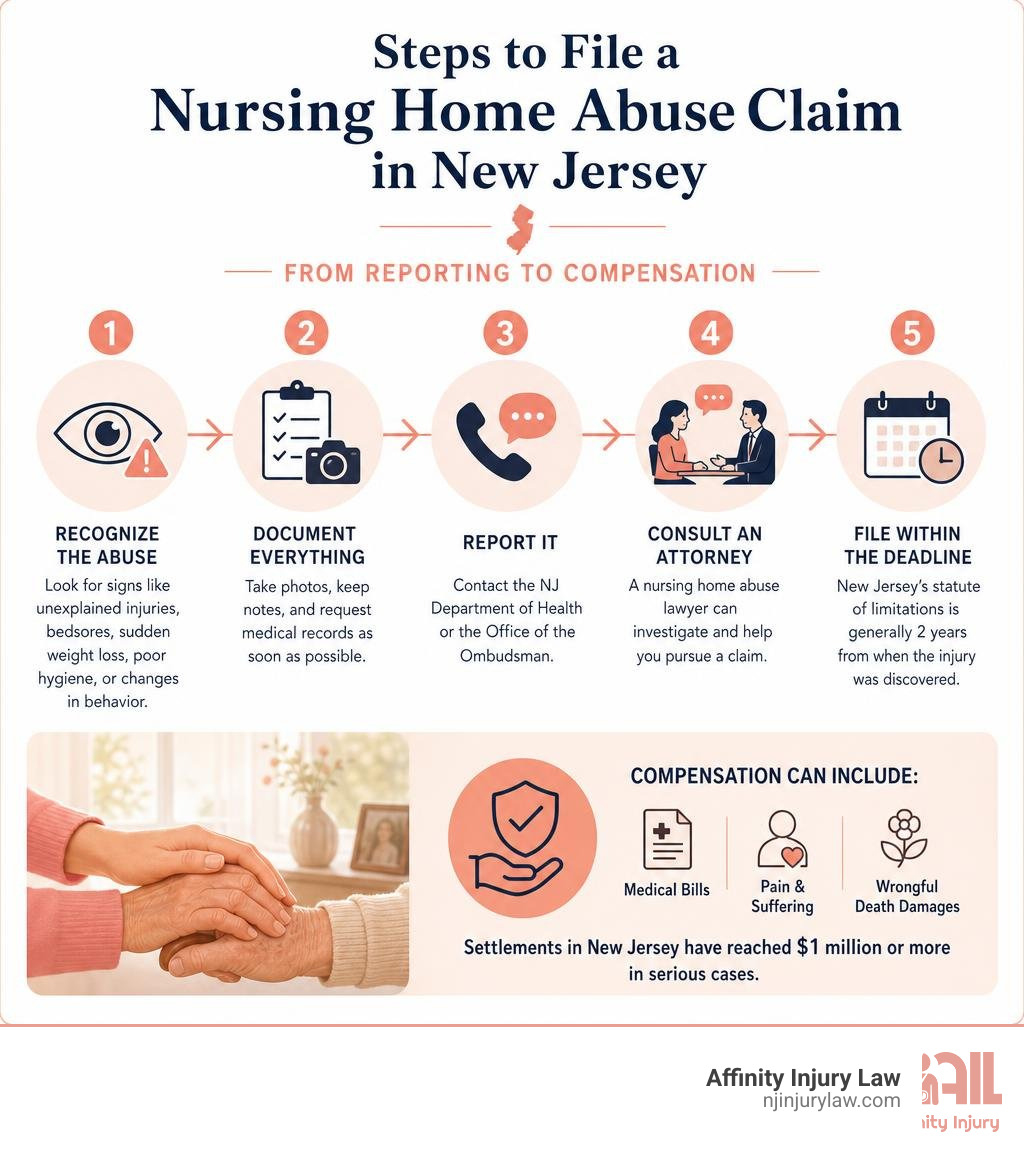
- Recognize the abuse — Look for unexplained injuries, bedsores, sudden weight loss, poor hygiene, or changes in behavior.
- Document everything — Take photos, keep notes, and request medical records as soon as possible.
- Report it — Contact the NJ Department of Health at 1-800-792-9770 or the Office of the Ombudsman at 1-877-582-6995.
- Consult an attorney — A nursing home abuse lawyer can investigate and help you pursue a claim.
- File within the deadline — New Jersey’s statute of limitations is generally 2 years from when the injury was discovered.
Compensation can include medical bills, pain and suffering, and wrongful death damages. Settlements in New Jersey have reached $1 million or more in serious cases.
Every year, families place their trust — and their loved ones — in New Jersey nursing homes, expecting safe and dignified care. But abuse and neglect happen more often than most people realize. Elder abuse is severely underreported, with an estimated 23 unreported cases for every one that is reported. Residents with dementia, limited mobility, or communication difficulties are especially vulnerable — and often unable to speak up for themselves.
The consequences can be devastating: infected bedsores, malnutrition, broken bones, and even death. In one widely reported New Jersey case, state officials described conditions so poor they called it a “massive scam” that exploited the sick and elderly while owners diverted millions in Medicaid funds.
If you suspect something is wrong, you are not alone — and you have real legal options.
My name is Ioana Enescu, Esq., founding member of Affinity Injury Law, and I have dedicated my practice to advocating for New Jersey residents who have been harmed through no fault of their own, including those pursuing nursing home abuse claims in New Jersey. As the daughter of two physicians, I bring a deep understanding of medical care standards to every case, and I am committed to making sure vulnerable residents and their families get the justice they deserve.
Understanding Abuse, Neglect, and Bedsores in NJ Facilities
When we move our parents or grandparents into a residential facility, we do so under the assumption that they will be protected, warm, and well cared for. Discovering that they have instead been subjected to substandard conditions is heartbreaking.
To protect your loved one, it is vital to understand the difference between active abuse and passive neglect. While abuse involves intentional actions to cause physical or psychological pain, neglect is a passive failure to provide basic life necessities like food, water, hygiene, and medical attention. Both are illegal, and both can form the basis of successful nursing home abuse claims in New Jersey.
Common Signs of Abuse and Neglect
Vulnerable residents may not always be able to tell you what is happening. They might suffer from cognitive decline, or they may feel too intimidated by staff to speak up. This means families must remain highly vigilant.
Look out for these common warning signs:
- Unexplained Physical Injuries: Frequent falls, sprains, dislocations, or suspicious bruises and cuts.
- Rapid Weight Loss and Dehydration: Sunken cheeks, dry skin, and sudden weakness can point to severe nutritional neglect.
- Poor Personal Hygiene: Residents left in soiled clothes, unbathed, or with unbrushed teeth.
- Emotional Withdrawal or Drastic Mood Changes: Sudden depression, extreme anxiety, or a noticeable fear of specific staff members.
- Unsanitary Living Conditions: Rooms smelling of urine, dirty bed linens, or unaddressed trash.
In the most extreme cases, systemic greed leads to filth and abominable care, where understaffed facilities leave residents in terrible conditions while operators pocket public funds. If your family member has suffered due to these inexcusable conditions, consulting our Personal Injury Lawyers New Jersey is the first step toward reclaiming their dignity and securing their safety.
Severe Injuries and Bedsores
Among the most common and preventable injuries caused by facility neglect are bedsores—also known as pressure ulcers or decubitus ulcers. Bedsores develop when a resident is left sitting or lying in one position for too long without being repositioned. The constant pressure cuts off blood flow to the skin, causing the tissue to die.
Bedsores progress through four distinct, increasingly dangerous stages:
| Bedsore Stage | Clinical Characteristics | Severity & Risks |
|---|---|---|
| Stage 1 | Skin is intact but shows persistent redness. The area may feel warm or tender to the touch. | Mild; highly treatable if identified and relieved immediately. |
| Stage 2 | The outer layer of skin breaks open, creating a shallow, red or pink sore or blister. | Moderate; requires immediate wound care to prevent infection. |
| Stage 3 | The wound deepens into a crater, exposing fat tissue beneath the skin. | Severe; high risk of localized infections and tissue death. |
| Stage 4 | The deepest stage. The wound crater open-exposes muscle, tendons, or underlying bone. | Life-threatening; can lead to osteomyelitis (bone infection) or sepsis. |
When a bedsore reaches Stage 3 or Stage 4, it is almost always a clear indicator of systemic neglect. Our Permanent Injuries Lawyers New Jersey regularly handle cases where untreated pressure ulcers have led to severe, life-altering infections. Nursing homes have a strict legal duty to implement turning schedules (usually every two hours) for immobile residents to prevent these agonizing wounds from ever forming.
Legal Framework for Nursing Home Abuse Claims New Jersey
Nursing homes in New Jersey do not operate in a vacuum. They are bound by strict federal and state regulations designed to protect the safety, health, and dignity of every resident. When facilities cut corners to maximize profits, they violate these laws, opening the door for families to take legal action.
The Nursing Home Reform Act and NJ Bill of Rights
At the federal level, the Nursing Home Reform Act of 1987 mandates that any facility receiving Medicare or Medicaid funding must provide services that maintain or enhance the physical, mental, and psychosocial well-being of its residents.
In New Jersey, residents are further protected by the New Jersey Nursing Home Responsibilities and Rights of Residents Act (often referred to as the Residents’ Bill of Rights). This state law guarantees residents the right to:
- A safe, clean, and decent living environment.
- Freedom from physical, chemical, and mental abuse or unauthorized restraints.
- Complete privacy during medical treatment and personal care.
- Manage their own personal finances or designate a trusted representative.
- Voice grievances without any fear of retaliation or discrimination.
Crucially, New Jersey law includes a fee-shifting statute designed to help victims afford quality legal representation. Under this rule, if a plaintiff successfully proves that a facility violated their statutory rights and that the violation directly caused actual damages, the nursing home may be ordered to pay the plaintiff’s attorney’s fees. This makes it much easier for families to stand up to wealthy corporate operators.
Key Evidence Needed for Nursing Home Abuse Claims New Jersey
To build a compelling case against a negligent facility, we must gather clear, undeniable evidence. Nursing homes and their insurance companies will do everything they can to blame injuries on “old age” or “pre-existing conditions,” making meticulous documentation absolutely essential.
Key pieces of evidence we collect include:
- Comprehensive Medical Records: Chart notes, wound care logs, physician orders, and medication administration records.
- Facility Staffing Records: Shift logs that show whether the home met state-mandated staff-to-resident ratios.
- Internal Incident Reports: Documentation of falls, medication errors, or unexpected hospital transfers.
- Witness Testimony: Statements from other residents, visiting family members, or cooperative staff whistleblowers.
- Visual Evidence: High-quality photographs of physical injuries, bedsores, or unsanitary room conditions.
- Electronic Surveillance: In some cases, families have successfully used nanny cam footage to capture physical abuse by contracted staff or therapists directly at the bedside.
Gathering this evidence quickly is vital. To make sure you do not inadvertently compromise your legal rights, review our guide on the 5 Mistakes That Can Hurt Your Personal Injury Claim in New Jersey to keep your case on the strongest possible footing.
How to Report Abuse and File a Complaint in NJ
If you suspect your loved one is in immediate danger, do not wait to file paperwork—call 911 or local law enforcement right away. If the danger is not immediate but you believe neglect or abuse is taking place, you must initiate the reporting process immediately to protect both your relative and other vulnerable residents.
Steps to Take When Suspecting Abuse
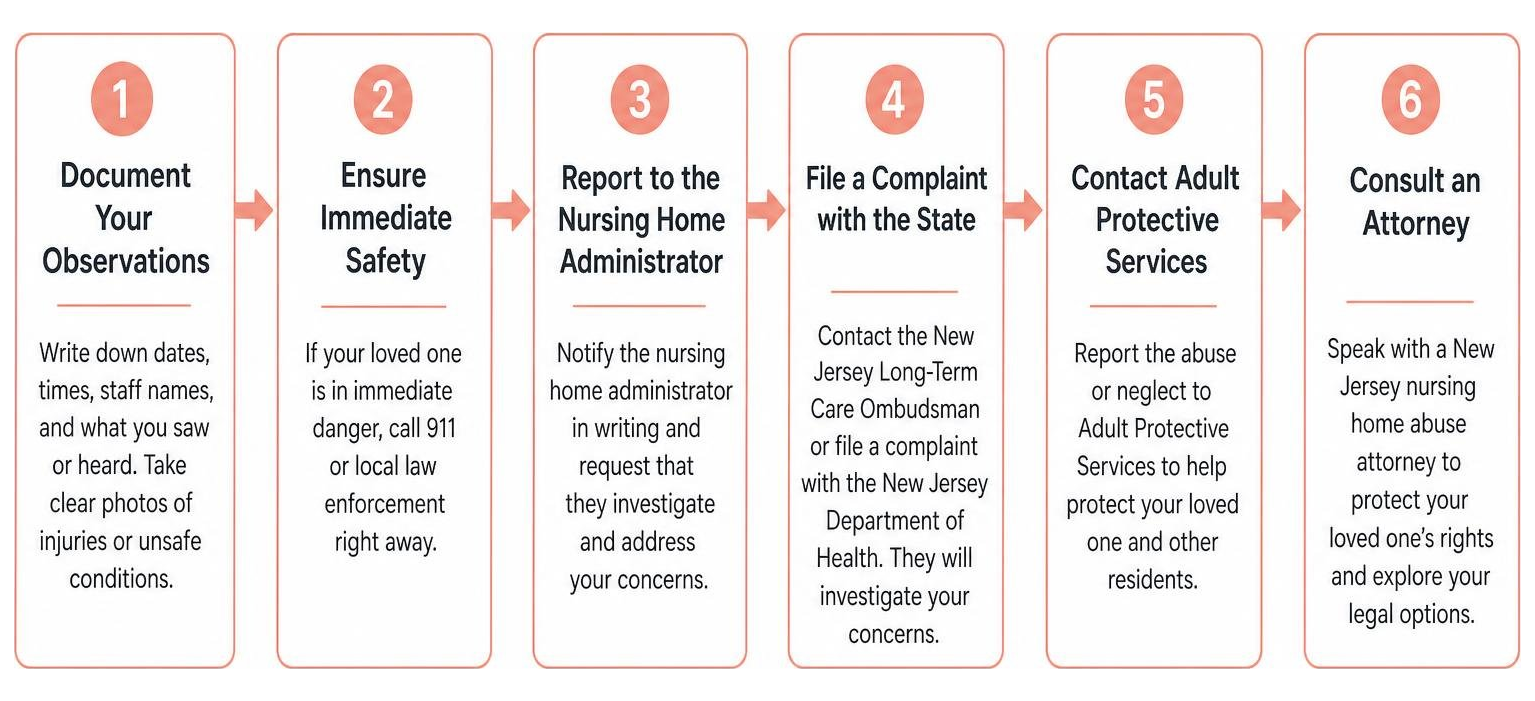
When you suspect that a facility is failing your loved one, taking structured, deliberate steps will help keep them safe while building a solid foundation for a future claim:
- Document Your Observations: Write down dates, times, names of staff on duty, and detailed descriptions of what you saw or heard. Take clear photos of any physical injuries or unsafe conditions.
- Raise the Issue with Administration: Report your concerns in writing to the Director of Nursing or the facility’s Administrator. Demand a formal investigation and a written response detailing their findings.
- File an Official State Complaint: Report the facility to the New Jersey Department of Health (NJDOH). You can submit a consumer complaint online, call their 24-hour hotline, or fax a completed complaint form (AAS-60) directly to 609-943-4977.
- Contact the Ombudsman: If the resident is 60 years of age or older and lives in a long-term care facility, contact the Office of the New Jersey Long-Term Care Ombudsman at 1-877-582-6995 to request an independent advocate.
- Seek Legal Counsel: Reach out to an experienced attorney to protect your family’s rights. If the neglect has unfortunately resulted in the loss of your family member, we advise consulting our Wrongful Death Lawyers New Jersey to explore your options for holding the facility fully accountable.
Recoverable Damages in Nursing Home Abuse Claims New Jersey
When we file a civil claim against a negligent nursing home, we seek financial compensation—known as “damages”—for the physical, emotional, and financial toll the mistreatment has taken on your family.
Depending on the details of your case, we can help you recover:
- Medical Expenses: Coverage for emergency room visits, hospital stays, surgeries, physical therapy, and specialized wound care required to treat the abuse-related injuries.
- Relocation Costs: The expenses associated with safely moving your loved one to a higher-quality, safer facility.
- Pain and Suffering: Compensation for the physical pain, fear, anxiety, and loss of enjoyment of life caused by the mistreatment.
- Disfigurement and Permanent Impairment: Damages for lasting physical scars or permanent loss of mobility.
- Punitive Damages: In rare cases where the facility’s actions were exceptionally reckless or intentional, the court may award punitive damages to punish the nursing home and deter similar conduct.
Frequently Asked Questions About NJ Nursing Home Claims
Navigating the legal system while caring for an aging relative can feel overwhelming. Here are answers to some of the questions we hear most frequently from families in Bergen County, Passaic County, and throughout New Jersey.
How long do you have to sue a nursing home in New Jersey?
In New Jersey, the statute of limitations for filing a personal injury or nursing home abuse lawsuit is generally two years from the date the injury occurred or was first discovered.
This is known as the “discovery rule.” For example, if a resident suffers a series of falls that the facility conceals, the two-year clock may begin when the family first discovers the resulting injuries or receives the medical records confirming the neglect. However, waiting is highly risky. Over time, physical evidence can disappear, staff members move away, and memories fade. It is always best to consult an attorney as soon as you suspect something is wrong.
What is the difference between nursing home neglect and abuse?
While both lead to severe harm and are legally actionable, they stem from different behaviors:
- Abuse is active and intentional. It involves a staff member deliberately acting to cause physical pain, emotional distress, or financial harm. Examples include hitting, pushing, yelling, using unauthorized physical restraints, or stealing a resident’s checks.
- Neglect is passive and care-based. It occurs when a facility fails to provide the basic standard of care required to keep a resident safe and healthy. Examples include forgetting to administer medication, failing to assist with mobility (leading to falls), or ignoring turning schedules (resulting in bedsores).
How are nursing home abuse cases investigated?
The investigation process usually runs on two parallel tracks:
- The State Investigation: Once you file a complaint with the New Jersey Department of Health, state investigators may conduct unannounced site visits, interview staff and residents, inspect the physical premises, and review medical charts. If they verify your allegations, they can issue citations, impose fines, or even suspend the facility’s Medicaid funding.
- The Legal Discovery Process: When we file a lawsuit on your behalf, we launch our own independent investigation. We subpoena internal staffing records, review corporate financial transactions, hire medical experts to review the clinical care, and take sworn depositions from the employees and administrators involved.
Conclusion: Let Us Stand Up for Your Family
No elderly or vulnerable resident should ever have to spend their golden years suffering in unsafe, negligent, or abusive conditions. When nursing homes prioritize corporate profits over human dignity, they must be held accountable.
At NJ Injury Law (Affinity Injury Law), we are committed to standing up for families in Lyndhurst, Bergen County, Passaic County, and across New Jersey. We understand how painful and stressful these situations are, which is why we handle all the legal heavy lifting so you can focus on your family’s healing and peace of mind.
We offer multilingual support to ensure you can communicate comfortably in your preferred language, and we operate on a strict no-fee-unless-we-win basis—meaning you won’t pay us a single cent in attorney’s fees unless we successfully secure compensation for your loved one.
If you suspect your relative has been mistreated, do not wait. Contact our Nursing Home Abuse Lawyers New Jersey today to schedule a free, confidential consultation. Let us help you protect your loved one and seek the justice your family deserves.