
Start Your New Jersey Dog Bite Claim Without Delaying Care
After a dog bite, get medical care, report the attack, save photos and witness details, and avoid giving a recorded statement to an insurer before you understand your options. A dog bite claim lawyer in NJ can gather evidence, identify available insurance coverage, and pursue payment for medical bills, missed income, pain, scarring, and other losses.
New Jersey generally holds a dog’s owner strictly liable when the bite happens in a public place or while the victim is lawfully on private property. This can apply even if the dog had never bitten anyone before. Still, insurers may dispute whether you were lawfully present, claim the dog was provoked, or question the full cost of your injuries.
Dog bites are not minor accidents. They can lead to infection, surgery, permanent scars, emotional trauma, and time away from work. In 2022, New Jersey had 1,074 dog bite insurance claims and more than $72 million in reported payouts. Acting early helps preserve the proof needed to protect your claim.
I am Ioana Enescu, Esq., a founding member of Affinity Injury Law and a New Jersey native focused on helping injured people seek the care and accountability they deserve. As a dog bite claim lawyer NJ residents can turn to, I bring a client-centered approach shaped by my legal training and commitment to the New Jersey community.
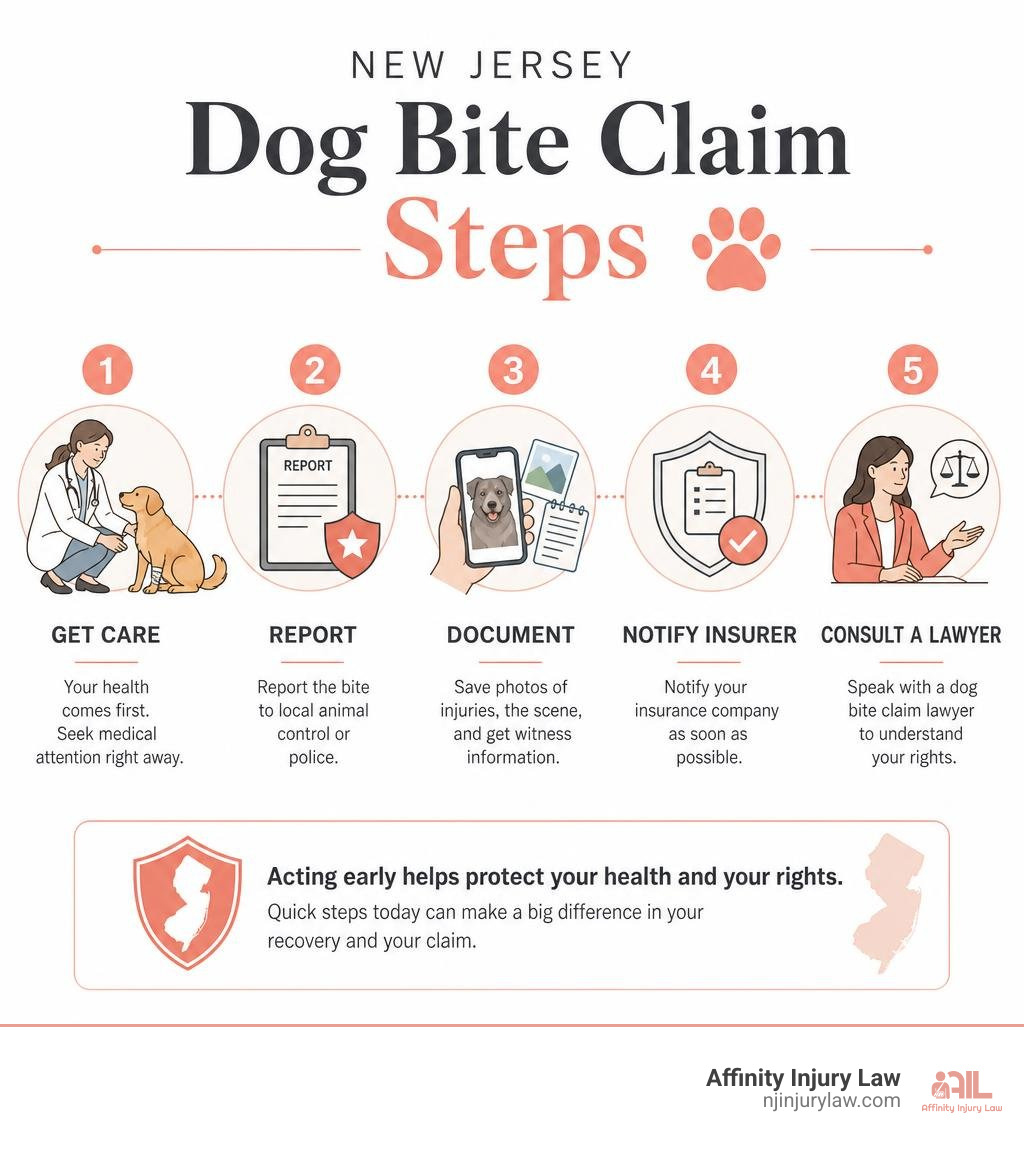
Quick look at dog bite claim lawyer nj:
Understanding New Jersey Dog Bite Laws and Strict Liability
Navigating the aftermath of an animal attack can feel overwhelming, but New Jersey statutory law provides some of the strongest protections in the nation for victims. Under New Jersey Revised Statutes (N.J.S.A.) Section 4:19-16, the state operates under a strict liability mandate for dog bites.
In everyday language, strict liability means an owner cannot escape financial accountability simply because their pet has always been friendly in the past. Under this statute, the owner is responsible for damages if:
- The dog bit the victim; and
- The attack occurred while the victim was in a public place (such as a park, sidewalk, or town square) or lawfully in a private place (including the property of the dog owner).
Unlike states that follow a traditional “one-bite rule”—where an owner only faces liability if they already knew the animal had vicious propensities—New Jersey holds owners accountable from the very first bite. You do not have to prove that the owner failed to build a taller fence, dropped the leash, or acted with reckless disregard. If the bite occurred and you were lawfully present, liability attaches directly to the dog’s owner.
When Do You Need a Dog Bite Claim Lawyer NJ for Strict Liability Cases?
If the law imposes strict liability, you might wonder why legal representation is even necessary. The reality is that insurance adjusters rarely hand over fair compensation without a fight. While statutory liability may seem open-and-shut on paper, insurance carriers employ seasoned adjusters and defense attorneys specifically trained to minimize financial payouts.
Insurers frequently dispute the facts by arguing over where you were standing, whether you were invited onto the premises, or whether your own behavior triggered the canine’s reaction. Furthermore, calculating the true value of an injury involves complex assessments of long-term medical costs, plastic surgery revisions, and post-traumatic stress. If you are handling an incident in North Jersey, learning how to file a dog bite claim with a Bergen County attorney ensures that you have legal counsel actively preserving evidence, handling hostile insurers, and valuing your claim accurately.
Common Defenses: Trespassing and Provocation
Insurance companies rely heavily on two statutory exceptions to defeat or reduce strict liability claims: trespassing and provocation.
- Trespassing (Unlawful Presence): The statute protects victims who are on public property or lawfully on private property. If an individual entered private property without an express or implied invitation, or without a legal duty (such as a postal worker delivering mail), the owner may argue that strict liability does not apply.
- Provocation: If the defense can show that the victim hit, kicked, cornered, or aggressively teased the animal, the strict liability shield may be compromised.
When strict liability is challenged, the legal framework often shifts toward general negligence or comparative negligence rules. Under New Jersey’s modified comparative negligence law, if a victim is found partially at fault (for example, engaging in behavior deemed provocative), any recovery is reduced by their percentage of fault. If the victim’s fault exceeds 50%, they are barred from recovering damages altogether.
| Legal Claim Type | Legal Standard | Prior Knowledge Required? | Primary Defenses Used |
|---|---|---|---|
| Strict Liability (N.J.S.A. 4:19-16) | Must prove bite occurred in public or lawful private space | No (Applies on first bite) | Trespassing, direct physical provocation |
| Common Law Negligence | Must prove failure of reasonable care (e.g., leash violation) | Often relevant to demonstrate foreseeability | Comparative fault, lack of owner control |
Essential Steps to Take Immediately After an Animal Attack

The actions you take in the initial hours and days following an animal attack significantly impact both your physical recovery and any future legal claim.
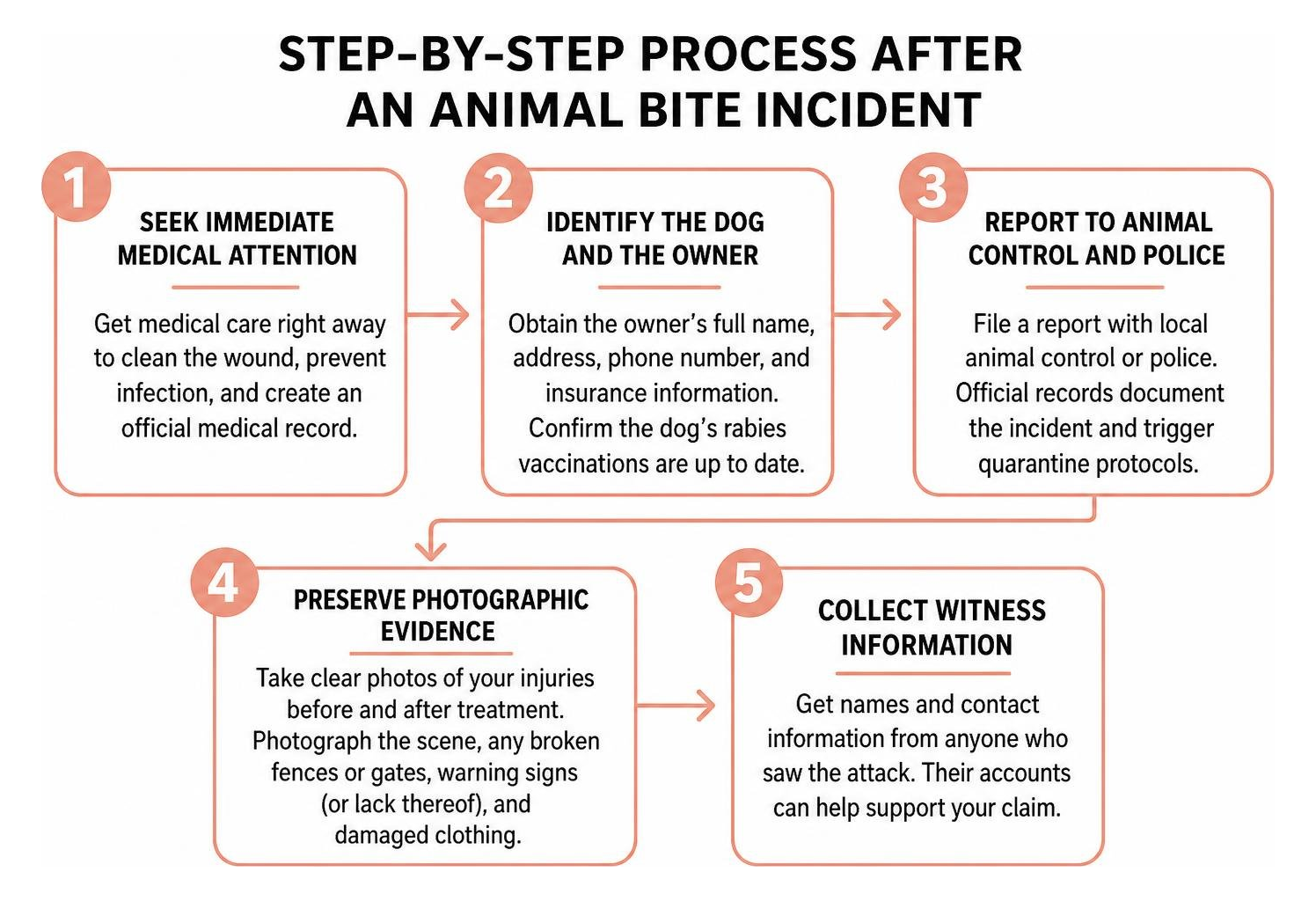
- Seek Immediate Medical Attention: Dog mouths harbor dangerous bacteria, including Capnocytophaga, Pasteurella, and staphylococcus. Puncture wounds carry a high risk of deep tissue infection. Visit an emergency room or urgent care clinic right away to clean the wound, receive tetanus or rabies prophylaxis if required, and create an official medical record.
- Identify the Dog and the Owner: Obtain the owner’s full name, address, phone number, and homeowner or renter insurance information. Confirm whether the dog’s rabies vaccinations are up to date.
- Report the Incident to Animal Control and Police: File a formal report with the local municipal animal control officer or police department in towns like Lyndhurst, Hackensack, Clifton, or Passaic. Official animal control records provide critical, objective documentation of the incident and trigger mandatory quarantine protocols.
- Preserve Photographic Evidence: Take clear, well-lit photos of all wounds before and after medical treatment. Photograph the exact scene where the attack took place, any broken fences or gates, warning signs (or lack thereof), and damaged clothing.
- Collect Witness Contact Information: Independent eyewitness accounts can quickly dismantle a defense attorney’s claims of provocation or trespassing.
- Maintain a Daily Recovery Diary: Document your pain levels, sleep disturbances, emotional distress, and activities you are unable to perform.
- Avoid Giving Recorded Statements: Insurance adjusters may call soon after the attack posing as helpful representatives. Politely decline to provide recorded statements or sign releases until you speak with our legal team.
Calculating Recoverable Damages and Claim Deadlines
Dog bites can lead to lifelong physical disfigurement and severe psychological trauma. In New Jersey, victims have the right to seek comprehensive compensation encompassing both economic and non-economic damages.
- Medical Bills: Immediate emergency room visits, wound debridement, sutures, prescription antibiotics, follow-up specialist visits, and physical therapy.
- Reconstructive and Plastic Surgery: Deep lacerations often leave raised keloid scars or tissue loss, requiring scar revision surgeries and cosmetic procedures months or years after the initial bite.
- Lost Wages and Diminished Earning Capacity: Time away from work for hospital stays, medical appointments, or physical disability caused by nerve damage.
- Pain and Suffering: Compensation for the physical agony endured during and after the attack.
- Psychological and Emotional Distress: Animal attacks frequently cause debilitating phobias (cynophobia), night terrors, anxiety, and post-traumatic stress disorder (PTSD), particularly in young children. Counseling and psychiatric support costs can be recovered.
Statute of Limitations and Deadlines in New Jersey
Under N.J.S.A. 2A:14-2, the statute of limitations for filing a personal injury lawsuit, including a dog bite claim, is generally two years from the date the injury occurred.
Missing this strict statutory deadline permanently extinguishes your legal right to pursue compensation in court. There are limited exceptions:
- Injuries to Minors: If the victim was under the age of 18 at the time of the bite, the two-year clock is typically tolled (paused) until their 18th birthday, giving them until age 20 to file suit.
- Public Entity Claims: If the animal was owned or controlled by a government entity or handler (such as a police K-9 unit), you must file a formal Title 59 Notice of Tort Claim within 90 days of the incident.
How a Dog Bite Claim Lawyer NJ Maximizes Settlement Value
In New Jersey, the average dog bite claim payout was $67,555 in 2022—above the national average of $64,555. Securing a recovery that accurately accounts for long-term care requires careful claim preparation.
When you work with our firm, we immediately locate all potential insurance policies, including homeowner policies, renter insurance, umbrella policies, and commercial liability coverage. We consult with medical experts and reconstructive surgeons to document future care costs, ensuring that settlement demands reflect future medical needs rather than just unpaid initial bills. If you need local representation in Northern New Jersey, learning how to choose a dog bite claim attorney in Passaic County can help you secure an advocate who knows the local court vicinages and insurance defense tactics.
How to Choose the Right Dog Bite Claim Lawyer NJ
Selecting an attorney is a crucial decision for your recovery. You need a dedicated advocate who understands the nuances of New Jersey tort law and is prepared to stand up to major insurance carriers.
When evaluating legal representation, consider the following factors:
- Focused Personal Injury Experience: Look for attorneys who regularly handle animal attack and premises liability litigation. You can review the ultimate guide to premises liability lawyer concepts to understand how these cases intersect with property owner duties.
- Contingency-Fee Representation: We believe quality legal care should be accessible to everyone. We work on a strict contingency fee model—meaning you pay zero upfront costs and no attorney fees unless we successfully win or settle your case.
- Trial Readiness: Insurers know which law firms settle quickly for low offers and which firms build trial-ready cases. Our willingness to take claims before a jury compels insurers to offer fair settlements.
- Multilingual Support: Clear communication is essential when discussing traumatic injuries. At Affinity Injury Law, we provide multilingual legal services to ensure every client is heard and understood throughout the legal process.
If you are looking for local support in Bergen County, finding the best Lyndhurst injury law office for your free consultation is an easy first step to protect your rights.
Frequently Asked Questions About NJ Dog Bite Claims
What is the average settlement for a dog bite claim in New Jersey?
Settlement amounts vary widely based on injury severity, scarring, permanent disability, and available insurance policy limits. While average claims in New Jersey sit around $67,555, cases involving severe facial trauma, nerve damage, or extensive plastic surgery often settle well into six figures or higher depending on coverage limits.
Can I file a claim if the dog has never bitten anyone before?
Yes. Under New Jersey’s strict liability statute (N.J.S.A. 4:19-16), dog owners are responsible for bite injuries even if the animal has never displayed aggressive behavior or bitten anyone in the past. The traditional “one-bite rule” does not apply to bite injuries in New Jersey.
What happens if the dog bite occurred on the owner’s private property?
You can still file a claim under strict liability as long as you were lawfully on the property. Lawful presence includes being an invited social guest, an invited business patron, a delivery worker, or a postal carrier. Our legal team regularly assists clients in working with premises liability law firms holding negligent property owners accountable when dangerous conditions and unsecured animals cause severe injury.
Conclusion
A sudden dog attack can leave lasting physical and emotional scars, but you do not have to carry the financial burden alone. New Jersey’s strict liability laws were enacted to protect victims, and our team is committed to making sure those laws work for you.
At Affinity Injury Law, we represent accident victims across Bergen County, Passaic County, and throughout New Jersey—including Lyndhurst, Hackensack, Paterson, Fort Lee, Paramus, Fair Lawn, Passaic, Clifton, and Wayne. We provide compassionate, multilingual representation backed by tireless advocacy, and you never pay any legal fees unless we win your case.
If you or a loved one has suffered an animal attack, contact our dedicated dog bite lawyers in New Jersey today to schedule your free, no-obligation case evaluation. Let us handle the insurance carriers so you can focus entirely on healing.