
How to Find a New Jersey Car Accident Lawyer
To compare New Jersey car accident lawyers, ask who will handle your case, whether they have handled claims like yours, and how legal fees and case costs work. Choose someone who explains New Jersey’s no-fault insurance rules in plain language and gives you time to ask questions. You should understand the fee agreement before you sign.
A crash can leave you dealing with pain, missed work, and calls from insurers at the same time. This guide will help you take the first steps, understand your options, and decide what to ask a lawyer.
I’m Ioana Enescu, Esq., a founding member of Affinity Injury Law and a longtime New Jersey resident who advocates for injured clients. My work with accident victims has shown me what people searching for new jersey car accident lawyers need first: clear answers and a practical next step.
Immediate Steps to Take After a Crash in New Jersey

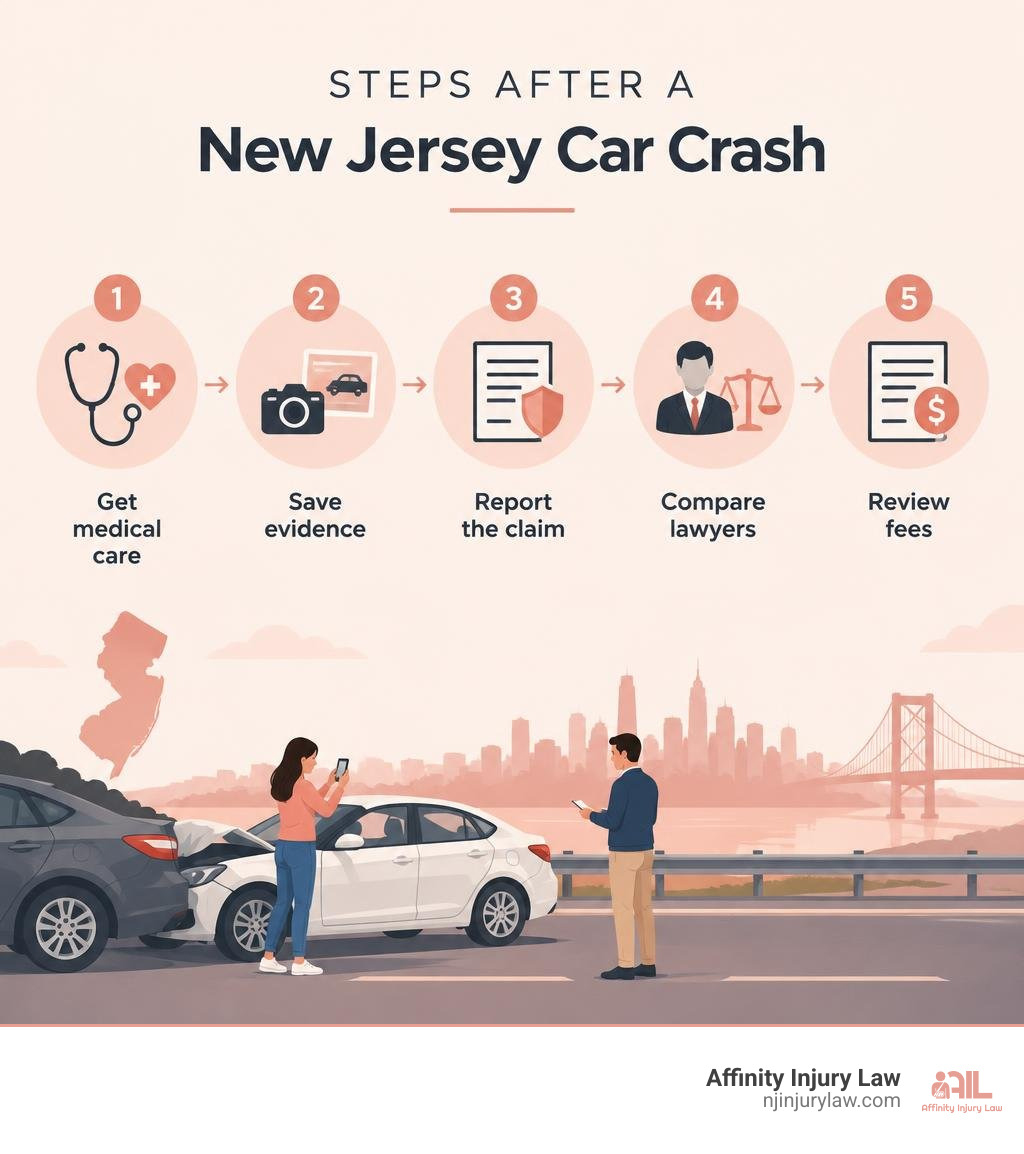
The moments directly following a collision are chaotic, but the actions you take can dramatically impact your physical recovery and your legal rights. With approximately 65,000 motor vehicle crashes occurring across New Jersey each year resulting in over 200,000 injuries, knowing the protocol helps protect your well-being and your future claim.
- Ensure Safety and Call 911: Move your vehicle out of active traffic if possible, turn on your hazard lights, and immediately call emergency services so police and paramedics are dispatched to the scene.
- Never Admit Fault: Cooperate fully with investigating officers, but stick strictly to observable facts without apologizing or speculating on what happened.
- Exchange Information: Collect the full name, contact information, driver’s license number, insurance carrier, and policy number of all motorists involved.
- Gather Witness Details: Obtain names and phone numbers from anyone who saw the crash happen before they leave the scene.
- Seek Comprehensive Medical Attention: Even if your adrenaline makes you feel fine, visit an emergency room, urgent care clinic, or your primary doctor as soon as possible.
- Notify Your Insurer: Report the accident to your own insurance provider promptly to open your mandatory personal injury protection claim.
When facing the aftermath of a wreck, understanding crucial collision facts ensures you avoid common missteps that adjusters look for when reducing claim payouts.
Documenting Critical Evidence at the Scene
Evidence degrades quickly once vehicles are towed and traffic resumes. If your physical condition allows, take extensive photographs and videos of the scene from multiple angles. Capture vehicle damage, skid marks, broken glass, traffic signals, obstructed road signs, and prevailing weather or road conditions.
If you or a nearby motorist has dashcam footage, save and back up the files immediately. Furthermore, make sure to ask the responding police officers for their names, badge numbers, and the incident report number so you can obtain the official crash report once filed.
Seeking Prompt Medical Attention
Adrenaline often conceals serious trauma such as concussions, whiplash, internal bleeding, and soft tissue damage. Seeking medical treatment within hours of a crash creates a vital link between the accident and your injuries.
Under New Jersey’s no-fault system, your Personal Injury Protection (PIP) medical benefits cover necessary diagnostic testing and medical treatments regardless of who caused the collision. Delaying medical care gives insurance adjusters room to argue that your injuries were caused by an unrelated event or were not as severe as claimed.
Understanding New Jersey Car Accident Laws and No-Fault Rules
New Jersey operates under a unique “choice no-fault” auto insurance framework. In standard situations, your own insurance company pays for your initial medical treatment through PIP coverage, regardless of whether you or the other driver caused the crash. However, this does not bar you from pursuing a personal injury lawsuit against an at-fault driver if your injuries meet specific legal criteria.
| Insurance Policy Element | Standard Policy | Basic Policy |
|---|---|---|
| Bodily Injury Liability | $25,000/$50,000 minimum (protects you if you injure others) | None included by default ($10,000 optional) |
| Personal Injury Protection (PIP) | Up to $250,000 per person/per accident | $15,000 per person ($250,000 for emergency care) |
| Property Damage Liability | $25,000 minimum | $5,000 per accident |
| Lawsuit Option Selection | Choice between “Limitation on Lawsuit” or “No Limitation” | Automatically defaults to “Limitation on Lawsuit” |
For an in-depth breakdown of state-mandated coverage options, you can review the official New Jersey Auto Insurance Buyer’s Guide.
Under New Jersey’s modified comparative negligence law, you can recover financial compensation from another at-fault party as long as your share of fault does not exceed 50 percent. If you are assigned a percentage of fault below that threshold, your final settlement or jury award is reduced proportionally by that percentage.
Limitation on Lawsuit vs. No Limitation Options
When purchasing auto insurance in New Jersey, drivers choose between two tort options that determine their right to sue for non-economic damages, commonly known as pain and suffering:
- Limitation on Lawsuit Option (Verbal Threshold): You can only sue an at-fault driver for pain and suffering if your injuries fall into one of six statutory categories: death, dismemberment, significant disfigurement or significant scarring, displaced fractures, loss of a fetus, or a permanent injury proven by objective clinical evidence.
- No Limitation on Lawsuit Option: You retain the full legal right to seek compensation for pain and suffering for any injury caused by a negligent driver, regardless of its permanence or severity.
New Jersey Statute of Limitations and Deadlines
Under New Jersey Statutes Title 2A:14-2, you have exactly two years from the date of the collision to file a personal injury lawsuit against the responsible parties. If you fail to file your lawsuit in civil court before this statutory window closes, you lose your legal right to seek compensation.
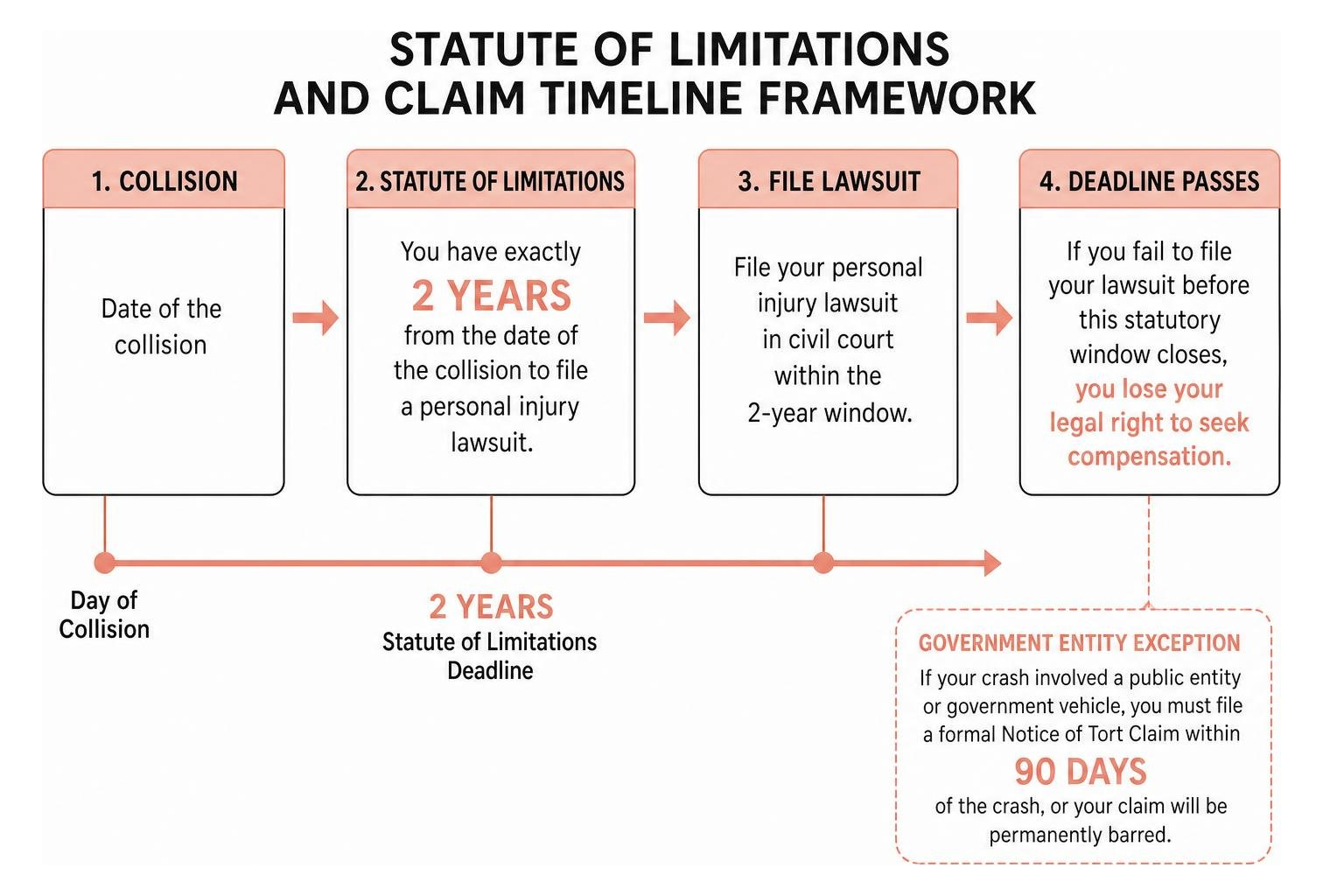
Special statutory exceptions and accelerated notice requirements apply if your crash involved a public entity or government vehicle, such as a New Jersey Transit bus or a municipal service truck. Under the New Jersey Tort Claims Act, you must file a formal Notice of Tort Claim within 90 days of the crash, or your claim will be permanently barred.
Why You Need New Jersey Car Accident Lawyers for Your Claim

Automobile collisions account for roughly 40 percent of all personal injury lawsuits filed in New Jersey courts. Insurance carriers deploy teams of adjusters and defense lawyers focused on minimizing claim payouts. Navigating PIP arbitration, verbal threshold requirements, and liability disputes without experienced legal counsel places you at an immediate disadvantage.
By securing professional legal representation, you level the playing field, ensuring every medical bill, lost wage, and non-economic harm is identified, calculated, and aggressively pursued.
When to Hire New Jersey Car Accident Lawyers After a Crash
While minor property-only fender benders can occasionally be resolved directly through insurance, you should retain legal representation if:
- You suffered injuries requiring hospitalization, surgery, physical therapy, or continuous medical monitoring.
- The other driver’s insurer denies liability, claims you caused the crash, or shifts blame.
- The wreck involved multiple vehicles, commercial trucks, rideshare services, or pedestrians.
- The responsible driver is uninsured, underinsured, or fled the scene.
- The insurance company offers an immediate lowball settlement before you understand the full extent of your future medical needs.
How Legal Representation Maximizes Case Value
Securing an optimal outcome requires building a trial-ready case from the start. Experienced attorneys work with accident reconstruction experts, forensic medical specialists, and economic analysts to demonstrate the full extent of your physical and financial losses.
Focusing on finding top legal counsel ensures your legal team has the financial resources and trial skill required to push past initial lowball offers and demand maximum financial compensation.
How to Choose the Right Attorney for Your Case
Not all law firms approach personal injury litigation the same way. When evaluating potential advocates, look for trial readiness, consistent communication, and extensive familiarity with the local county court systems where your case will be heard, such as Bergen County or Passaic County.
At Affinity Injury Law, we understand that accessibility and clear communication are essential. Our firm offers complete multilingual legal support so you can comfortably discuss your case, understand your rights, and make informed choices without language barriers.
Questions to Ask Prospective New Jersey Car Accident Lawyers
Before retaining an attorney, schedule a consultation and ask targeted questions to evaluate their qualifications:
- Will you personally manage my case, or will it be passed to a paralegal or junior associate?
- What specific experience do you have handling cases involving New Jersey’s verbal threshold?
- How often do you take cases to trial in local Superior Courts versus accepting settlement offers?
- What is your contingency fee structure, and how are out-of-pocket litigation expenses handled?
- How often will your team provide updates regarding my claim’s status?
Evaluating Experience, Trial Readiness, and Local Presence
A lawyer who frequently practices in your local jurisdiction understands the procedural nuances of that county’s Superior Court civil division. Local presence across Bergen, Passaic, Essex, and Hudson counties demonstrates familiarity with local court dockets, defense attorneys, and judges.
Insurance carriers know which attorneys settle quickly and which prepare every file for trial. Choosing a firm with a reputation for courtroom preparation gives you substantial leverage during settlement negotiations.
Calculating Compensation and Understanding Legal Costs
Car accident settlements and trial verdicts in New Jersey vary significantly based on injury severity, fault allocation, and available insurance policy limits. While settlements for minor injuries typically fall between $15,000 and $50,000, catastrophic injury cases involving permanent disability regularly exceed $1 million.
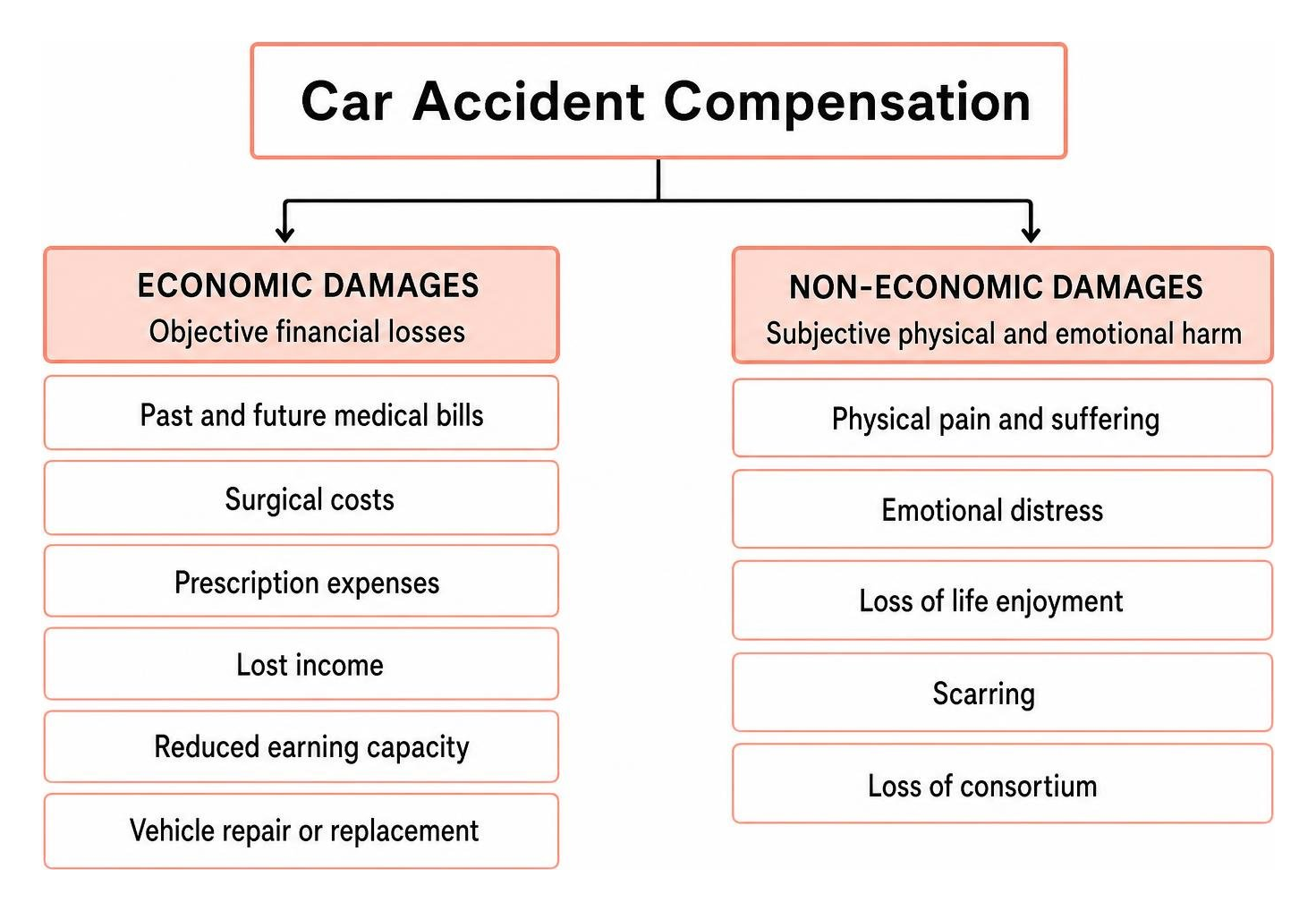
Recoverable damages are split into two primary categories:
- Economic Damages: Objective financial losses, including past and future medical bills, surgical costs, prescription expenses, lost income, reduced earning capacity, and vehicle repair or replacement.
- Non-Economic Damages: Subjective physical and emotional harm, including physical pain and suffering, emotional distress, loss of life enjoyment, scarring, and loss of consortium.
How Contingency Fees Work in Personal Injury Claims
Reputable personal injury lawyers represent clients on a contingency fee basis. This means you pay no upfront retainers or hourly attorney fees. Your legal team only collects an attorney fee if they successfully recover money for you through a settlement or verdict.
By understanding contingency fee structures, you can review your agreement with confidence. In New Jersey, Rule 1:21-7 strictly caps contingency fees for personal injury matters (such as 33.33% of the first $750,000 recovered), protecting clients from unfair fee practices.
Factors That Impact Settlement Timelines
A car accident claim can resolve in as little as four to six months or take two years or longer if full litigation is required. Key factors that dictate the timeline include:
- Reaching Maximum Medical Improvement (MMI): Your attorney cannot accurately value your claim until your doctors determine whether your injuries have healed or resulted in permanent limitations.
- Insurance Company Cooperation: Prompt, fair evaluations by insurance adjusters lead to quicker resolutions, while bad-faith delay tactics require formal litigation.
- Court Calendars and Discovery: If a lawsuit is filed in New Jersey Superior Court, completing depositions, expert reports, and mandatory civil arbitration takes time.
Frequently Asked Questions About New Jersey Auto Accident Claims
How much does it cost to hire an auto accident attorney in New Jersey?
Hiring an attorney involves zero out-of-pocket costs when working on a contingency fee basis. Your lawyer advances all litigation expenses, such as court filing fees, medical record costs, and expert witness retainers. If your case is successful, the attorney fee and advanced costs are deducted directly from the final settlement or court award. If no money is recovered, you owe no legal fees.
What is the average car accident settlement amount in New Jersey?
Settlement values depend on the specific facts of each case. Minor soft tissue claims subject to the limitation on lawsuit threshold often resolve between $15,000 and $50,000. Severe injuries—such as spinal trauma, traumatic brain injuries, multiple displaced fractures, or wrongful death claims—routinely result in six-figure and seven-figure recoveries, subject to available insurance policy limits and defendant assets.
Can I still recover damages if I was partially at fault for the crash?
Yes. Under New Jersey’s modified comparative fault system, you can recover financial damages as long as you were not more than 50 percent at fault for the incident. Your final financial award will simply be reduced by your percentage of fault. For example, if you are awarded $100,000 but determined to be 20 percent at fault, you will receive $80,000.
Conclusion
Recovering from a serious car crash is difficult, but you do not have to navigate the insurance, medical, and legal processes alone. Having experienced, dedicated legal representation ensures your rights are protected under New Jersey law while you focus on healing.
At Affinity Injury Law, we provide aggressive legal advocacy backed by genuine client care and multilingual support across Bergen County, Passaic County, and throughout northern New Jersey. We work on a strict contingency basis, meaning there is never a fee unless we win your case. Take the first step toward getting your life back on track and schedule a consultation with New Jersey car accident lawyers today.