


When a Fall Changes Everything: Finding the Right Slip and Fall Lawyers in New Jersey
If you’re hurt and looking for slip and fall lawyers New Jersey residents trust, here’s what you need to know right now:
Quick answers for injured New Jersey residents:
| Your Question | Short Answer |
|---|---|
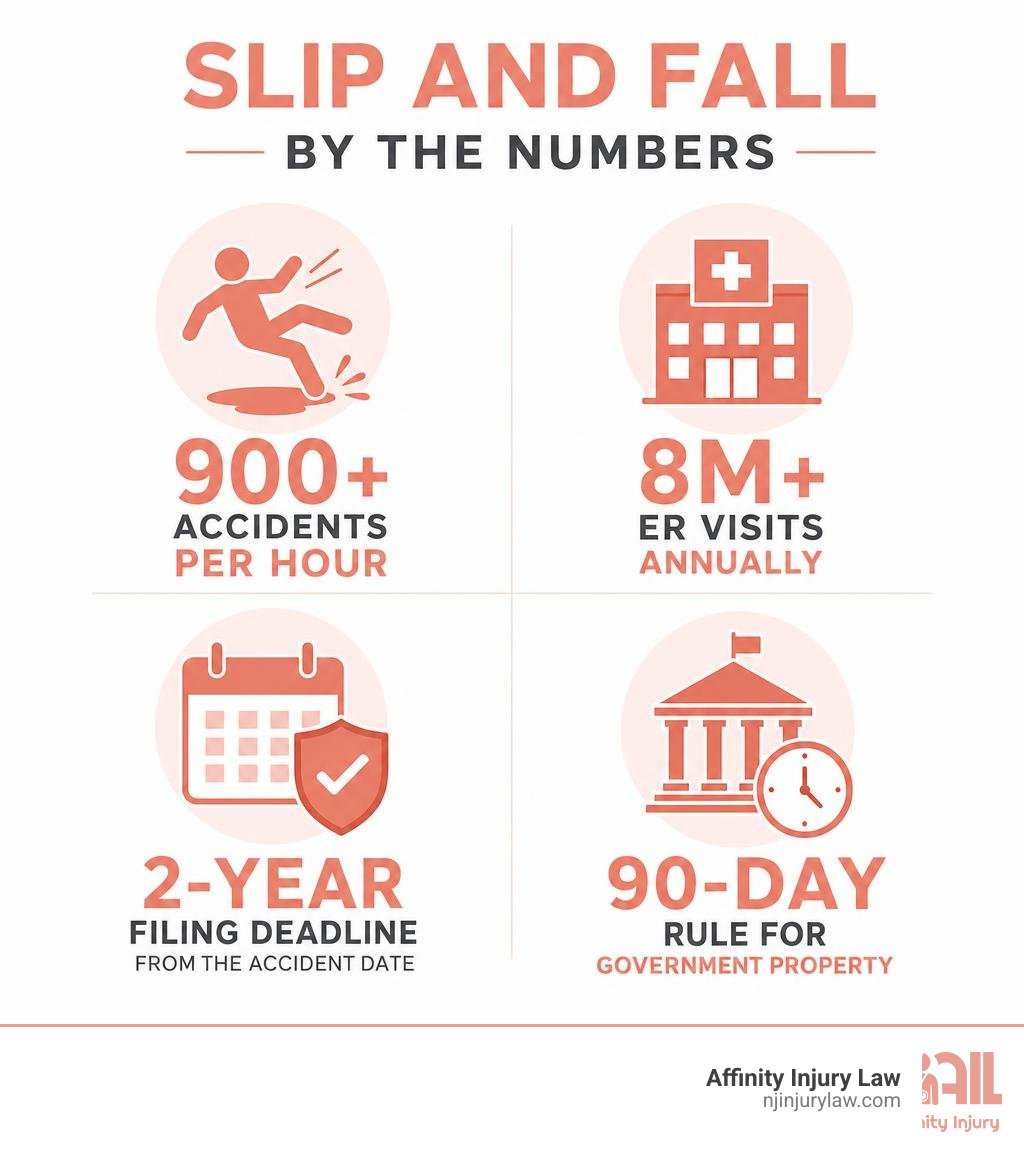
| How long do I have to file? | 2 years from the accident date (90 days for government property) |
| Can I recover if I was partly at fault? | Yes, as long as you’re 50% or less at fault |
| What does a lawyer cost? | Nothing upfront — most work on contingency (no win, no fee) |
| What should I do first? | Get medical care, photograph the scene, report the incident |
| Who can be held liable? | Property owners, tenants, businesses, or municipalities |
Slip and fall accidents happen more than 900 times per hour across the United States. They send over eight million people to emergency rooms every year. And yet, many victims walk away thinking it was just bad luck — only to face mounting medical bills, missed paychecks, and an insurance company that isn’t on their side.
The truth is, a fall on someone else’s property is often someone else’s legal responsibility.
New Jersey law requires property owners — whether they run a grocery store, manage an apartment complex, or own a business — to keep their premises reasonably safe. When they don’t, and you get hurt, you may have the right to full financial compensation.
I’m Ioana Enescu, Esq., a founding member of Affinity Injury Law and a long-time New Jersey resident with deep experience guiding injured clients through slip and fall lawyers New Jersey cases — from gathering evidence to negotiating with insurers. If you’re dealing with pain, bills, and pressure to settle fast, this guide is written for you.
Proving Liability: What Your Slip and Fall Lawyers New Jersey Must Establish
To win a slip and fall lawsuit in the Garden State, you cannot simply point to a wet floor and ask for compensation. You must establish that the property owner or manager was legally negligent. This body of law is known as premises liability.
To build a winning case, our team must systematically prove the four core elements of negligence:
- Duty of Care: The property owner had a legal obligation to keep the property safe for visitors.
- Breach of Duty: The owner knew (or should have known) about a dangerous hazard and failed to fix it or warn you about it.
- Causation: The dangerous hazard directly caused your slip and fall.
- Damages: You suffered actual physical and financial harm (such as medical bills and lost wages) as a result of the fall.
When we investigate these cases as experienced Premises Liability Lawyers New Jersey advocates, we look closely at how the property was maintained and what steps the owner took to prevent injuries.
Duty of Care and Negligence
A property owner’s legal responsibility depends heavily on why you were on the property in the first place. Under New Jersey premises liability law, visitors are generally categorized into three groups:
- Business Invitees: These are customers, clients, or patrons visiting a commercial business (like a supermarket in Bergen County or a retail store in Passaic County). Business owners owe the highest level of reasonable care to invitees. They must actively inspect their premises, repair hazards promptly, and warn customers of any hidden dangers.
- Licensees: These are social guests visiting a private home or property. While the property owner or tenant does not have a duty to constantly inspect for hazards, they must warn social guests of any known, hidden dangers that the guest is unlikely to notice on their own.
- Trespassers: These are individuals who enter a property without permission. Generally, landowners owe no duty of care to adult trespassers, other than refraining from setting intentional traps or causing willful harm.
Whether the responsible party is a commercial landlord, a residential tenant, or a business owner, they must exercise reasonable care to ensure the environment is safe for lawful visitors.
Proving Actual vs. Constructive Notice
One of the most heavily contested battlegrounds in any slip and fall case is proving that the property owner had “notice” of the hazard. If a customer spills soda in a grocery aisle and you slip on it two seconds later, a court may find the store owner is not liable because they did not have enough time to discover and clean up the spill.
To establish liability, we must prove either:
- Actual Notice: The property owner, manager, or an employee physically saw the hazard, was explicitly told about it, or actually created the dangerous condition themselves (such as mopping a floor and failing to put up a warning sign).
- Constructive Notice: The hazard existed for such a long duration of time that the owner should have discovered and resolved it through a routine, reasonable inspection.
To determine the degrees of responsibility in New Jersey slip and fall cases, we analyze maintenance logs, sweep sheets, and security camera footage. If a spill sat in a highly trafficked aisle for 45 minutes without being addressed, we can strongly argue that the store had constructive notice of the hazard.
The “Mode of Operation” Rule in New Jersey
Proving notice can be incredibly difficult for an injured victim. Fortunately, New Jersey law offers a powerful exception known as the Mode of Operation rule.
This rule applies to businesses that utilize self-service operations — such as grocery stores with open produce bins, self-serve beverage stations, or buffet lines. Because these businesses allow customers to handle goods themselves, spills and dropped items are highly predictable.
Under the mode of operation rule, if you slip on a hazard that is a foreseeable result of the business’s self-service model, the burden of proof shifts. You do not have to prove that the store had actual or constructive notice of the specific spill. Instead, an inference of negligence is created, and the business must prove that they took exceptional, reasonable precautions to prevent such accidents.
Common Causes and Determining Who Is Liable
Slip and fall accidents can happen anywhere, but they are frequently caused by preventable environmental hazards. Some of the most common culprits we see in our practice include:
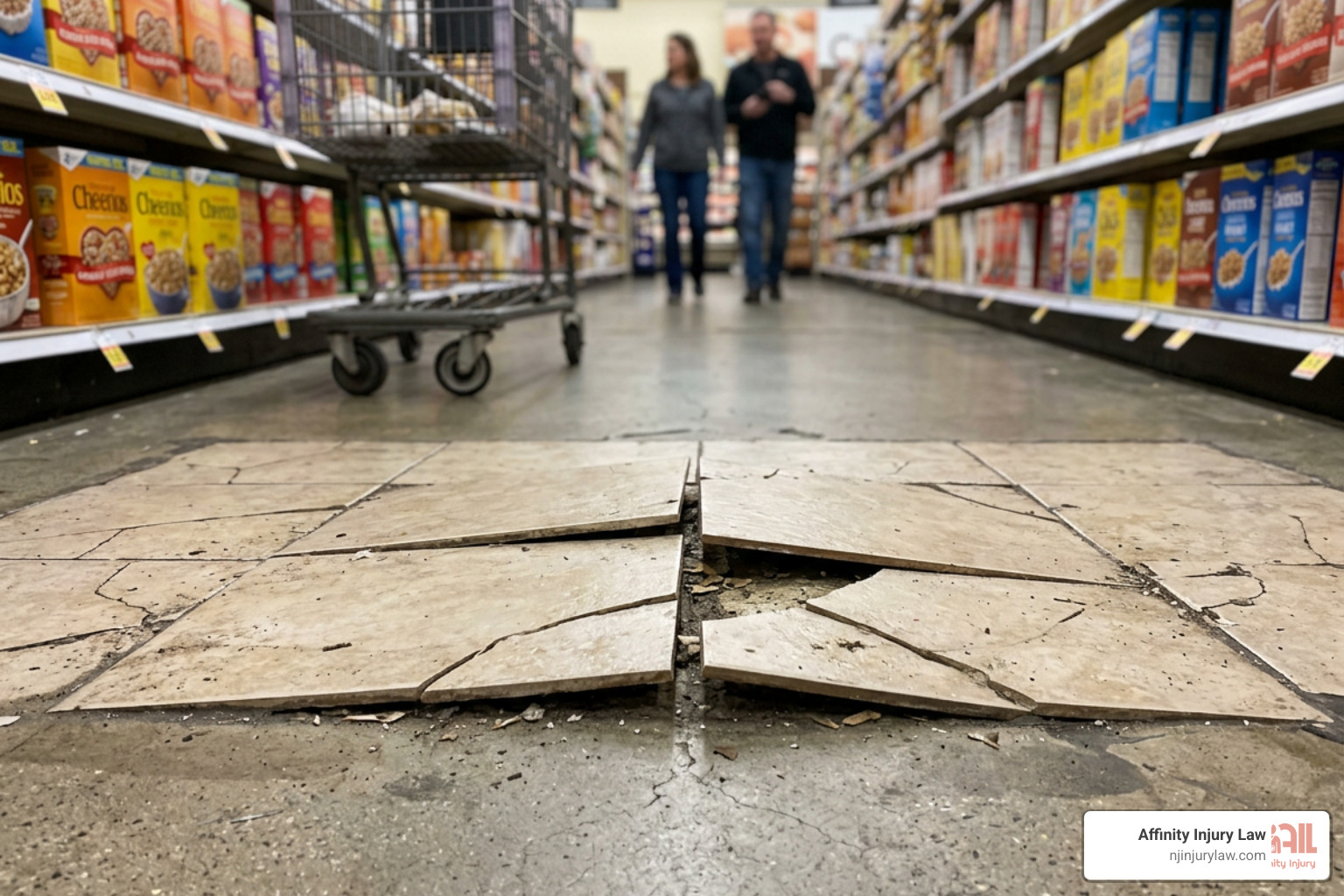
- Uneven flooring, torn carpeting, or cracked tiles
- Liquid spills, leaked refrigeration lines, or freshly mopped floors without warning signs
- Poor lighting in stairwells, hallways, and parking lots
- Broken handrails or crumbling staircases
- Potholes in commercial parking lots
If you have been hurt due to these conditions, working with dedicated Personal Injury Lawyers New Jersey advocates can help you identify exactly who is responsible for your injuries.
Private Property vs. Public Property Claims
Determining liability depends heavily on where your accident took place. The rules for seeking compensation change drastically depending on whether you fell on private property, commercial property, or public property.
- Private Residences: If you fall at a friend’s house or a rented apartment complex, the homeowner’s or landlord’s insurance policy typically covers the damages.
- Commercial Properties: Stores, malls, and office buildings are managed by complex networks of owners, tenants, and third-party maintenance contractors. We investigate these relationships to find out who had physical control over the area where you fell.
- Public Property: Falling on a municipal sidewalk, a public park, or inside a government building involves strict legal hurdles. These claims are governed by the New Jersey Tort Claims Act (NJTCA). Unlike standard private claims, you must file a formal Notice of Claim within 90 days of the accident. If you miss this tight deadline, you lose your right to sue the government entity entirely.
Whether you need assistance navigating a municipal claim in Bergen County or require a local Lyndhurst personal injury legal resource to evaluate a sidewalk fall, understanding these jurisdictional differences is vital. You can also consult resources like Justia’s Bergen County listings to understand the local legal landscape.
How Slip and Fall Lawyers New Jersey Handle Ice and Snow Accidents
Winters in northern New Jersey bring freezing temperatures, snow accumulation, and the dreaded threat of black ice. When a freeze-thaw cycle occurs, snow melts during the day and refreezes into invisible sheets of ice overnight.
New Jersey law draws a sharp line between commercial and residential property owners regarding snow and ice removal:
- Commercial Duty: Commercial property owners have an active, ongoing duty to clear snow and ice from their walkways, sidewalks, and parking lots to ensure safe access for customers. If they hire a negligent snow removal contractor who fails to salt properly, both the property owner and the contractor can be held liable.
- Residential Exemption: Generally, private residential homeowners are exempt from liability for the natural accumulation of snow and ice on public sidewalks in front of their homes. However, if a homeowner attempts to clear the snow and does so negligently — such as piling snow in a way that melts across the sidewalk and refreezes into a dangerous hazard — they can be held legally responsible.
If you slipped on ice in Passaic County, we can help you review weather reports, local snow removal ordinances, and property records to build a strong claim. For further local insights, you can review Justia’s Passaic County listings to understand your rights.
Comparative Negligence and Recoverable Damages
When you file a slip and fall claim, the insurance company’s primary defense tactic is to blame you. They might argue that you were distracted by your phone, wearing inappropriate footwear, or walking in an area clearly marked as closed.
New Jersey’s 50% Comparative Negligence Rule
New Jersey operates under a modified comparative negligence system, specifically the “50 percent rule.” This means you can still recover financial compensation even if you were partially at fault for your own fall — provided your percentage of fault is 50% or less.
If you are found partially responsible, your final financial recovery will be reduced by your percentage of fault. For example, if a jury determines your total damages are $100,000, but finds you were 20% at fault because you were wearing slippery shoes, your final award will be reduced to $80,000. If your fault is found to be 51% or higher, you are barred from recovering any compensation at all.
Types of Damages You Can Recover
A slip and fall can result in severe, life-altering injuries such as traumatic brain injuries (TBIs), spinal damage, and complex bone fractures. The financial recovery we pursue for our clients is divided into two primary categories:
| Economic Damages (Objectively Verifiable) | Non-Economic Damages (Subjective, Intangible) |
|---|---|
| Emergency room and hospital bills | Physical pain and suffering |
| Future medical rehabilitation and physical therapy | Emotional distress and anxiety |
| Lost wages from missed work | Loss of enjoyment of life |
| Loss of earning capacity (if permanently disabled) | Loss of consortium (impact on relationships) |
Every case is unique, and decoding average slip and fall settlement amounts in NJ requires a thorough analysis of your medical records, economic losses, and the long-term impact of your injuries.
What to Do Immediately After a Fall to Protect Your Claim
The actions you take in the minutes and hours following a slip and fall accident can make or break your future legal claim. Insurance companies are quick to clean up hazards and deny that dangerous conditions ever existed.
Step-by-Step Post-Accident Guide
If you are physically able to do so, follow these steps immediately after a fall:
- Seek Medical Care Immediately: Your health is the top priority. Go to an urgent care or emergency room right away. This ensures your injuries are treated and creates an immediate medical record linking your physical trauma directly to the fall.
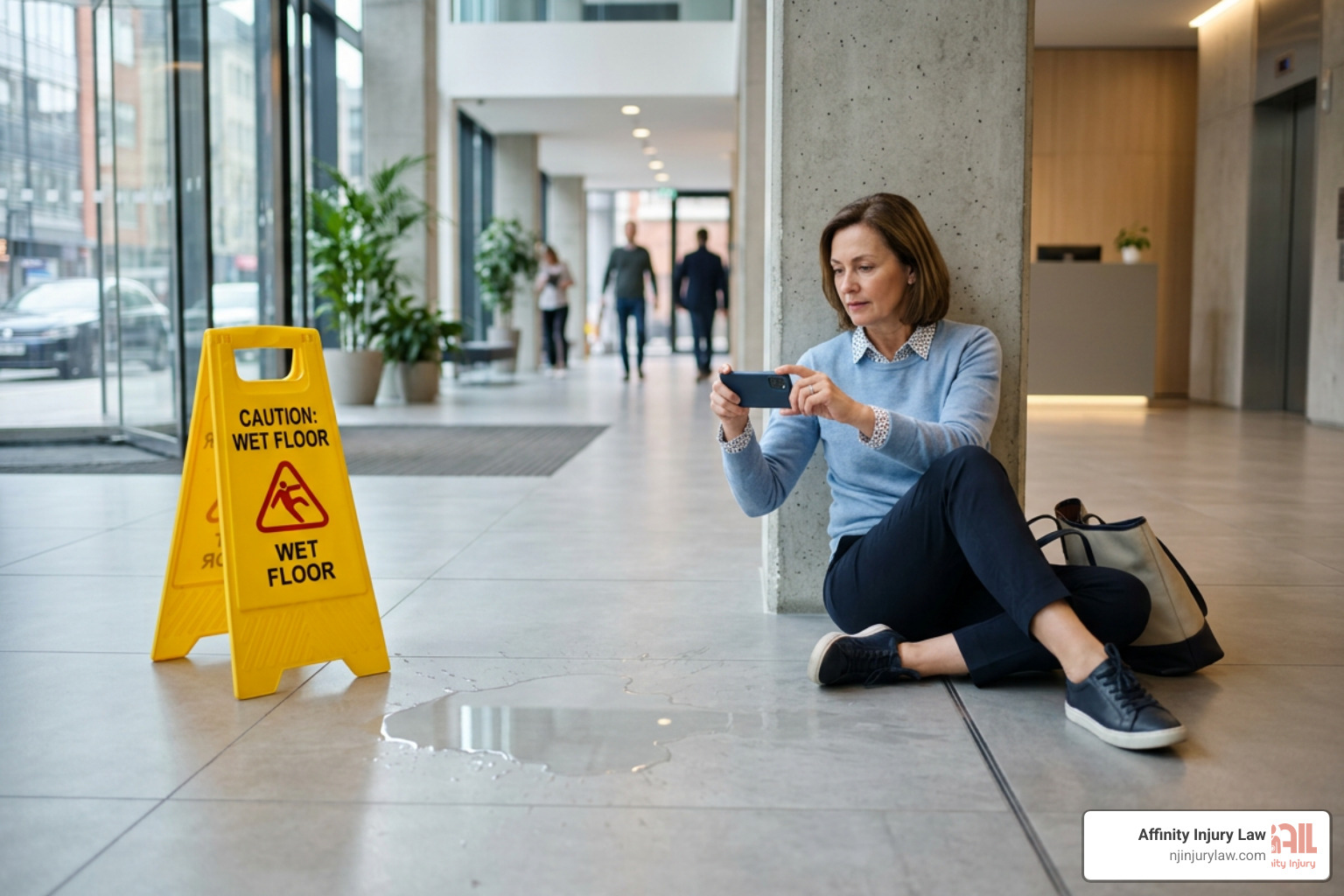
- Document the Scene: Take clear photos and videos of the hazard that caused you to fall (the puddle, the ice, the broken step). Take wide-angle shots of the surrounding area, noting the lack of warning signs or poor lighting.
- Report the Incident: Notify the property owner, manager, or landlord immediately. Request that they fill out a formal incident report, and ask for a physical or digital copy before you leave.
- Gather Witness Contact Info: If anyone saw you fall or noticed the hazard beforehand, ask for their names and phone numbers. Their unbiased testimony can be invaluable.
- Preserve Your Clothes and Shoes: Place the shoes and clothing you were wearing during the fall into a sealed bag. Do not wear or wash them, as they may contain physical evidence of the hazard (such as oil, grease, or chemical residue).
- Avoid Speaking to Insurance Adjusters: Do not give recorded statements or accept early settlement offers until you have consulted a lawyer.
For a comprehensive checklist on securing your case, read our detailed guide on How to Document Your Slip Fall Accident for Max Comp.
How Slip and Fall Lawyers New Jersey Maximize Your Settlement
An experienced attorney does much more than just file paperwork. We handle the heavy lifting so you can focus on healing:
- We immediately issue “spoliation letters” to preserve vital security camera footage before it is overwritten.
- We consult with expert flooring engineers, meteorologists, and medical specialists to build an airtight case.
- We handle all communication and aggressive negotiations with the insurance companies, who are notorious for offering lowball settlements to unrepresented victims.
Frequently Asked Questions About New Jersey Slip and Fall Claims
What is the statute of limitations for a slip and fall in New Jersey?
In New Jersey, the standard statute of limitations for personal injury claims is two years from the date of the accident. If you do not file a lawsuit within this window, you lose your right to seek compensation. However, if your fall occurred on government-owned property, you must file a formal Notice of Claim within 90 days under the New Jersey Tort Claims Act.
Can I still recover damages if I was partially at fault for my fall?
Yes. Under New Jersey’s modified comparative negligence law, you can recover damages as long as your share of the blame does not exceed 50%. Your final compensation will simply be reduced by your percentage of fault.
What evidence is most important to preserve after a slip and fall accident?
The most critical evidence includes photos and videos of the hazard taken immediately after the fall, the footwear and clothing you wore, the official property incident report, witness contact details, and continuous medical records documenting your injuries.
Conclusion
A sudden slip and fall can derail your physical health, your career, and your financial stability. You should not have to pay the price for a property owner’s negligence.
At Affinity Injury Law, we are dedicated to helping injury victims across Bergen County, Passaic County, and all of New Jersey secure the full compensation they deserve. We stand out by offering multilingual support, ensuring that language barriers never stand in the way of justice for our diverse New Jersey communities.
We operate on a strict no-fee-unless-we-win contingency model. You pay absolutely nothing upfront, and we only get paid if we successfully recover compensation for you.
If you or a loved one has been injured, don’t wait until crucial evidence disappears. Contact our compassionate legal team today to schedule your free, no-obligation case evaluation. Let us help you hold negligent property owners accountable.
Get a Free Consultation with Slip and Fall Lawyers New Jersey Residents Trust