

Finding the Right Medical Malpractice Lawyer in New Jersey
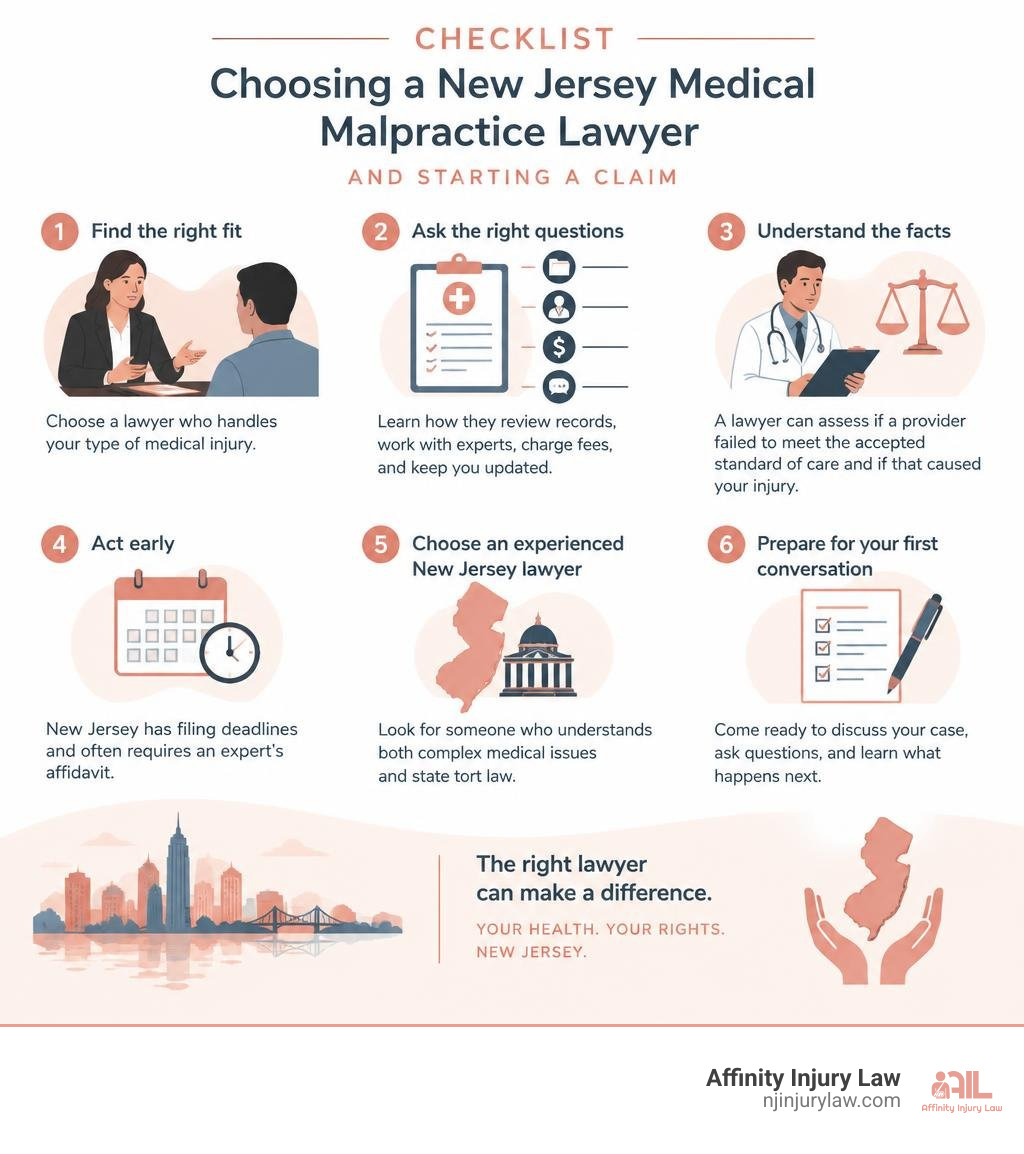
Start with a lawyer who handles your type of medical injury. Ask how they review medical records, work with medical experts, charge fees, and keep clients updated. You should leave a first conversation knowing who will handle your case and what happens next.
A bad medical outcome does not always mean malpractice. A lawyer can assess whether a healthcare provider failed to meet the accepted standard of care and whether that failure caused your injury. New Jersey claims also have filing deadlines and often require an expert’s affidavit, so it helps to seek advice early.
I’m Ioana Enescu, Esq., a founding member of Affinity Injury Law, a New Jersey native, and the daughter of two physicians. When searching for medical malpractice lawyers in New Jersey, residents need clear guidance to compare attorneys and prepare for that first conversation.
New Jersey is home to over 8,000 licensed physicians working across world-class hospital networks and private clinics. Yet, medicine is an inherently high-stakes field. Throughout their careers, approximately 1 in 5 physicians will face a medical malpractice claim. When healthcare systems falter, the human cost is immense. State-level data places New Jersey 15th in the nation for total medical malpractice payouts, with over $200 million paid out in damages in recent years. Navigating this legal terrain requires an attorney who understands both complex physiological medicine and nuanced state tort law.
Understanding Medical Negligence and Claims in New Jersey
Medical malpractice occurs when a doctor, surgeon, nurse, hospital, or other medical professional deviates from the accepted standard of care, directly causing injury or death to a patient. In New Jersey, the standard of care is defined as the level of care, skill, and treatment that is recognized as acceptable and appropriate by reasonably prudent healthcare providers in the same medical specialty.
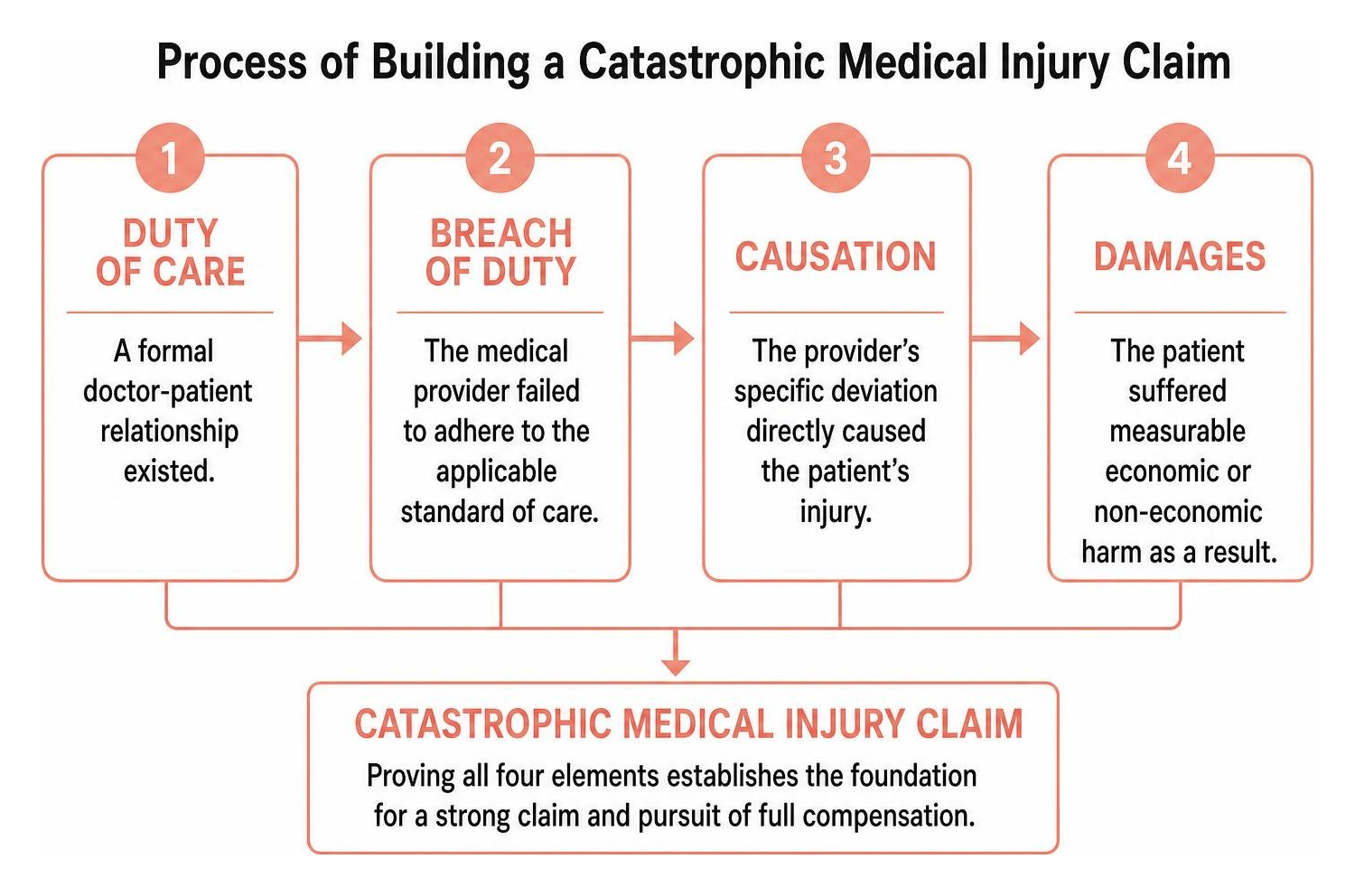
A poor clinical outcome or an unforeseen complication does not automatically establish negligence. Medicine is not an exact science, and treatments carry inherent risks. To build an actionable claim, an injured patient must prove four core elements:
- Duty of Care: A formal doctor-patient relationship existed.
- Breach of Duty: The medical provider failed to adhere to the applicable standard of care.
- Causation: The provider’s specific deviation directly caused the patient’s injury.
- Damages: The patient suffered measurable economic or non-economic harm as a result.
The distribution of malpractice claims in New Jersey highlights several common vulnerabilities in clinical care:
| Claim Category | Percentage of NJ Claims | Typical Clinical Causes | Financial & Settlement Impact |
|---|---|---|---|
| Diagnostic Errors | 30% | Missed cancer, delayed heart attack diagnosis, misread imaging | High; often involves advanced illness progression or premature death |
| Surgical Errors | 25% | Wrong-site surgery, punctured organs, retained foreign objects | Moderate to High; requires corrective surgeries and prolonged recovery |
| Birth Injuries | 15% | Oxygen deprivation, delayed C-sections, brachial plexus damage | Severe; life-care plans often require multi-million-dollar lifetime settlements |
| Medication & Treatment Errors | 20% | Incorrect dosages, contraindicated drug interactions, pharmacy errors | Variable; depends on organ damage or systemic toxicity |
| Anesthesia & Other Complications | 10% | Intubation trauma, dosage errors, inadequate monitoring | Severe; carries high risk of permanent brain damage or fatal arrest |
If you suspect that a local practitioner or facility failed you, reading your guide to choosing a medical error lawyer in bergen county can help you evaluate your legal standing before taking formal action.
Evaluating Complex Diagnostic and Surgical Errors
Diagnostic delays and surgical oversights make up over half of all medical negligence actions filed in New Jersey courts. When a cardiologist misinterprets an electrocardiogram (EKG) in an emergency room, or an oncologist fails to order a timely biopsy for an abnormal lesion, precious treatment windows vanish.
Emergency medicine demands adherence to strict triage and diagnostic protocols. In chaotic ER settings, hasty discharges and failure to order confirmatory imaging frequently lead to catastrophic strokes or cardiac events. Similarly, surgical and anesthesia procedures carry rigorous safety checklists. Anesthesiologists must continuously monitor vital signs, ventilation, and fluid balance; failing to notice hypoxia for even a few minutes can cause permanent cognitive impairment.
Patients researching specialized representation across Northern New Jersey communities can consult legal directories such as Justia’s list of the Best Medical Malpractice Lawyers in Fort Lee, NJ and look for attorneys who regularly litigate complex diagnostic and surgical error claims in local courts.
How Medical Malpractice Lawyers New Jersey Handle Catastrophic Loss Claims
Catastrophic injury claims represent the most demanding segment of medical litigation. These cases involve severe life-altering harms, such as traumatic brain injury (TBI) from oxygen deprivation, permanent spinal cord damage, total blindness, severe surgical disfigurement, and wrongful death. They also encompass wrongful birth claims, where negligent prenatal screening or genetic counseling deprives parents of vital information regarding severe congenital disorders.
Proving damages in a catastrophic loss case requires collaborating with medical specialists, vocational experts, and life-care planners. These professionals calculate the true cost of lifelong medical monitoring, specialized nursing care, home modifications, and lost future earning capacity. Understanding what compensation can a lyndhurst catastrophic injury lawyer help you recover ensures your family does not settle for an amount that falls short of future care requirements.
How to Select Top Medical Malpractice Lawyers New Jersey

Selecting an attorney for a medical injury lawsuit is a consequential choice. Medical malpractice litigation is resource-intensive, highly technical, and vigorously defended by hospital insurance carriers. Evaluating attorney credentials and objective industry honors provides a clear benchmark of ability:
- Certified Civil Trial Attorney: In New Jersey, the Supreme Court confers this designation on fewer than 3% of all licensed attorneys. It requires demonstrated trial experience, rigorous peer reviews, and passing a comprehensive written examination.
- American College of Trial Lawyers (ACTL): Fellowship is strictly by invitation and limited to no more than 1% of the total lawyer population in any given state.
- Litigation Counsel of America (LCA): A trial lawyer honorary society whose membership is restricted to less than 0.5% of American lawyers.
- Martindale-Hubbell AV Preeminent Rating: The gold standard for peer-reviewed legal ability and ethical standards.
- New Jersey Super Lawyers: A peer-nominated rating service highlighting attorneys who have attained high peer recognition and professional achievement.
Essential Qualifications and Board of Medical Examiners Defense Experience
An exceptional medical malpractice litigator must possess an intimate understanding of both sides of the courtroom. Seasoned attorneys who have experience defending healthcare providers or representing physicians and nurses in administrative hearings before the New Jersey Board of Medical Examiners bring valuable insights to plaintiff claims.
Attorneys familiar with licensing defense understand how hospitals build their defenses, how medical boards evaluate standard-of-care deviations, and how defense counsel coaches expert witnesses. When deposed or cross-examined at trial, defense experts often struggle against a plaintiff’s lawyer who knows hospital bylaws, charting systems, and board disciplinary standards as thoroughly as they do.
Fee Structures and What to Expect from Medical Malpractice Lawyers New Jersey
Reputable personal injury and malpractice firms represent injured clients on a contingency fee basis. Under this arrangement, clients pay zero upfront legal fees or out-of-pocket costs for expert witnesses, depositions, and medical record retrieval. The law firm advances all litigation expenses and only recovers legal fees as an agreed-upon percentage of the final settlement or jury verdict. If the case does not yield a recovery, the client owes nothing in attorney fees.
To better understand how these financial agreements protect injured patients, review the ultimate guide to hiring a contingency fee accident lawyer as well as our detailed breakdown on attorneys that dont get paid unless you win whats the catch.
Beyond finances, evaluate communication standards during your initial consultation. Top-tier attorneys should provide direct case updates, demystify complex medical terminology, and offer multilingual accommodations to ensure you are fully empowered throughout the legal process.
The Medical Malpractice Legal Process in New Jersey Courts
Litigating a medical error in New Jersey involves strict procedural steps designed to weed out frivolous claims early. Once you suspect negligence, an attorney initiates an extensive investigation:
- Comprehensive Medical Records Retrieval: Counsel collects all electronic health records, nursing logs, laboratory results, surgical notes, and audit trails from every treating facility.
- Independent Expert Review: Practicing physicians in the exact specialty of the defendant doctor review the file to establish standard-of-care breaches.
- Filing the Complaint: The legal action is formally entered into the New Jersey Superior Court system.
- Submitting the Affidavit of Merit (AOM): Required under N.J.S.A. 2A:53A-27, an independent, credentialed specialist must sign a sworn statement certifying that the defendant’s care fell outside acceptable medical practices.
- Discovery & Depositions: Both sides exchange documents, interrogatories, and take sworn testimony from all treating staff, defendants, and expert witnesses.
- Mediation & Trial: If insurance carriers refuse a fair settlement, the case proceeds to a jury trial.
Before taking formal steps, reviewing what you need to know before calling a lyndhurst medical malpractice attorney will help you gather your medical timeline and documentation.
Settlement Negotiations and Trial Verdicts in NJ
Insurance companies defend medical malpractice lawsuits aggressively. Across New Jersey, approximately 60% of tried malpractice cases conclude with a defense verdict, while 40% result in a plaintiff verdict or negotiated settlement. Because juries are often skeptical of claims against healthcare professionals, building an airtight evidentiary foundation is essential.
When liability is established, compensation can be substantial. The average medical malpractice payout in New Jersey is around $300,000, with a median payout of $150,000. Catastrophic injury verdicts involving lifelong neurological harm, spinal cord damage, or wrongful death frequently reach into the millions. Exploring your legal avenues through understanding your options for a lyndhurst injury case settlement gives you a realistic view of how economic losses, medical liens, and pain and suffering are negotiated.
Frequently Asked Questions About Medical Malpractice in New Jersey
What is the New Jersey Affidavit of Merit requirement?
Under New Jersey law (N.J.S.A. 2A:53A-27), a plaintiff filing a medical malpractice claim must provide the court with an Affidavit of Merit within 60 days of the defendant’s formal answer (extendable by an additional 60 days upon showing good cause). This document is an executed statement from an independent, appropriately credentialed medical specialist certifying that there is a reasonable probability that the care, skill, or knowledge exercised by the defendant physician fell outside acceptable professional standards. Failure to serve a compliant Affidavit of Merit within the statutory timeframe almost always results in a complete dismissal of the case with prejudice.
What is the average medical malpractice payout in New Jersey?
The average medical malpractice recovery in New Jersey is approximately $300,000, with a median figure of $150,000. Minor diagnostic delays or treatable surgical errors often settle near the median range, while catastrophic loss cases—such as infant birth asphyxia, irreversible brain injury, or the death of a primary household provider—regularly result in multi-million-dollar settlements or jury awards to cover lifetime medical care and lost earnings.
How long do injured patients have to file a malpractice lawsuit in NJ?
Under N.J.S.A. 2A:14-2, the standard statute of limitations for personal injury and medical malpractice in New Jersey is two years from the date the injury occurred. However, under the “discovery rule,” if the patient could not reasonably have known that their injury was caused by medical negligence at the time it happened, the two-year clock may begin on the date the harm was discovered (or reasonably should have been discovered). For minor children injured at birth or during early childhood, specific statutory tolling rules apply, allowing claims to be filed up until the child’s 13th birthday in certain birth injury scenarios.
Conclusion
Medical malpractice claims are among the most intricate cases in New Jersey civil law. Holding a healthcare system accountable requires deep legal knowledge, medical literacy, and the financial resources to stand up to aggressive defense firms and insurance adjusters.
At Affinity Injury Law (NJ Injury Law), we represent injured patients and their families throughout Bergen County, Passaic County, and across the state—including Lyndhurst, Hackensack, Paterson, Fort Lee, Paramus, Fair Lawn, Passaic, Clifton, and Wayne. We handle all claims on a no-fee-unless-you-win basis, backed by attentive, multilingual client communication every step of the way. If you or a loved one suffered harm due to substandard medical care, contact our dedicated medical malpractice lawyers new jersey today to schedule a free, confidential case evaluation.