

Finding Nursing Home Abuse Lawyers in New Jersey
If you suspect abuse or neglect, make sure your loved one is safe, document what you see, and speak with a New Jersey nursing home abuse lawyer promptly. Look for someone who handles injury claims, can explain how they will get medical and facility records, and gives you clear answers about fees. You can also report your concerns to the New Jersey Department of Health. Do not wait for a state investigation to finish before asking about your legal options.
I’m Ioana Enescu, Esq., a founding member of Affinity Injury Law and a longtime New Jersey resident who advocates for clients to receive the care and attention they deserve. If you searched for “nursing home abuse lawyers new jersey,” this guide will help you spot warning signs and prepare to discuss a possible claim.
Understanding Elder Abuse and Neglect Under New Jersey Law

Elder abuse and neglect in long-term care facilities encompass actions or omissions that cause harm, distress, or serious risk of injury to a vulnerable resident. In New Jersey, nursing homes are strictly regulated to protect residents from substandard care, intentional harm, and institutional neglect.
When families place their loved ones in a long-term care facility, they enter into a profound relationship of trust. Unfortunately, that trust is broken when care facilities cut corners, understaff shifts, or fail to supervise caregivers properly. To understand your options under state law, consulting a comprehensive nursing home abuse claims guide can clarify the legal benchmarks required to prove liability. You can also review the responsibilities of nursing homes under New Jersey Revised Statutes Section 30:13-3 for the statutory duties facilities must meet.
Under New Jersey statutes, mistreatment generally falls into distinct categories:
- Physical Abuse: The intentional infliction of bodily injury, pain, or physical coercion (e.g., hitting, improper restraint, rough handling).
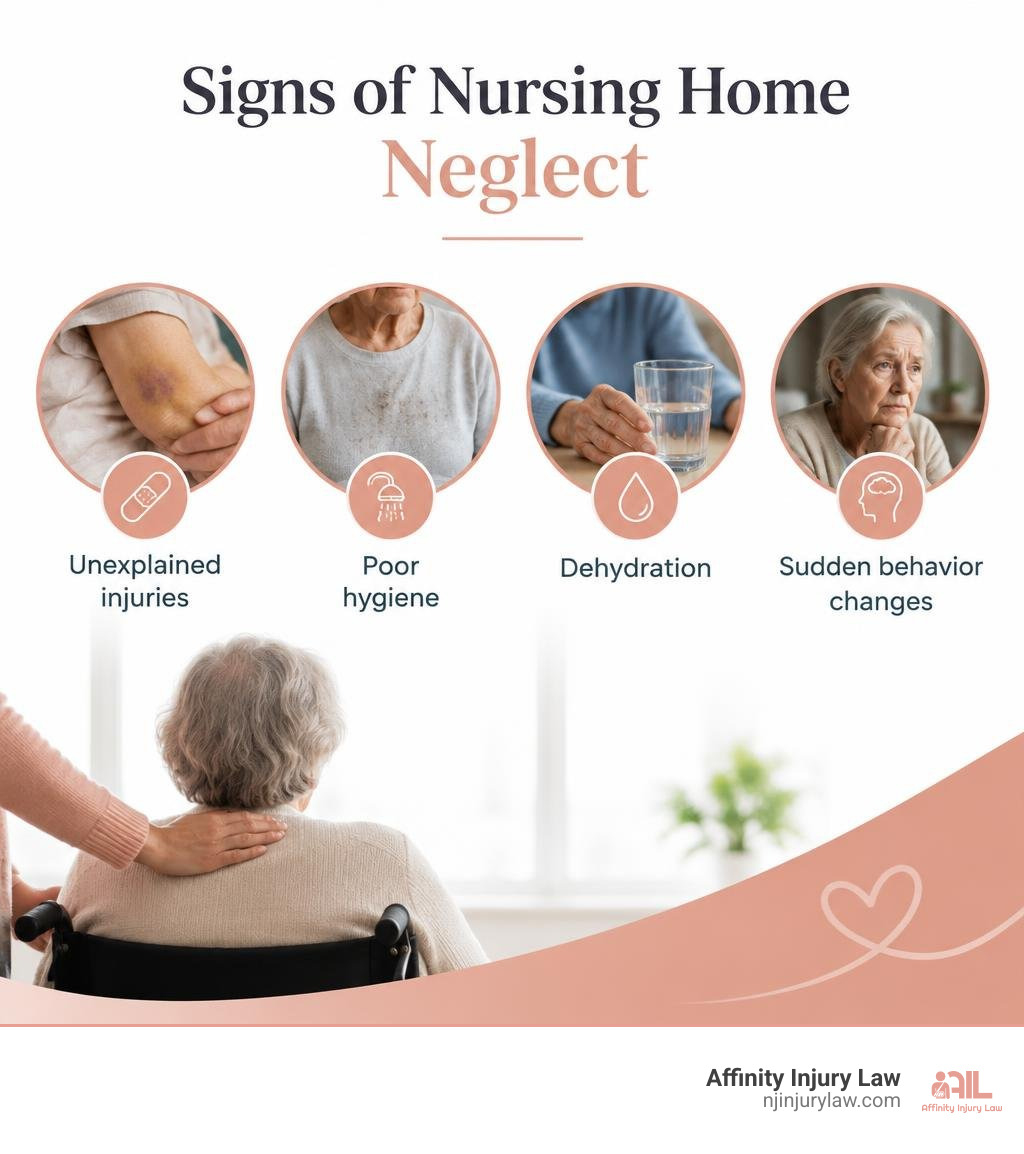
- Neglect: The failure of facility staff to provide necessary food, hydration, medical oversight, personal hygiene, and movement assistance to prevent physical deterioration.
- Emotional and Psychological Abuse: Verbal assaults, isolation, humiliation, threats, and intimidation by caregivers or other residents.
- Financial Exploitation: Unauthorized control over a resident’s funds, personal property, benefits, or legal documents.
- Medical Malpractice & Medication Errors: Giving incorrect dosages, withholding prescribed treatments, or failing to report acute medical emergencies to attending physicians.
Common Types and Warning Signs of Facility Mistreatment
Neglect often presents subtly before escalating into a life-threatening crisis. Families should maintain vigilant oversight during visits. The table below details common abuse categories, observable behavioral red flags, and physical indicators:
| Abuse Category | Behavioral Signs | Physical Indicators |
|---|---|---|
| Physical Neglect | Lethargy, withdrawal, fearfulness around specific staff members | Advanced pressure ulcers (bedsores), severe dehydration, rapid weight loss |
| Physical Abuse | Uncharacteristic agitation, sudden aggression, rocking behavior | Unexplained bruises, welts, broken eyeglasses, bilateral limb marks |
| Medication Neglect | Heavy sedation, disorientation, extreme dizziness, tremors | Sudden health crashes, unmanaged pain, organ failure indicators |
| Environmental Hazard | Reluctance to walk or leave bed, fear of facility bathrooms | Frequent falls, fractured hips, head trauma, dirty bed linens |
| Emotional Trauma | Depression, sudden silence when caregivers enter, regressive behavior | Sudden loss of appetite, insomnia, reluctance to speak freely |
State Regulatory Standards and the Nursing Home Residents’ Rights Act
New Jersey provides some of the strongest statutory protections for long-term care residents in the country under the Nursing Home Residents’ Rights Act (N.J.S.A. 30:13-1 et seq.). This statute guarantees residents the fundamental right to manage their financial affairs, enjoy privacy in treatment, be treated with dignity, and live free from mental and physical abuse.
Under New Jersey law, nursing homes are also legally required to maintain mandatory minimum direct-care staff-to-resident ratios. Despite these clear legal mandates, state regulatory inspections reveal that New Jersey ranks in the top 10 states for nursing home abuse violations, with over 40% of facilities cited for at least one serious deficiency.
When facilities prioritize profit margins over statutory staffing requirements, critical routines such as turning immobile residents every two hours, monitoring fluid intake, and assisting with bathroom visits get skipped.
When to Consult Nursing Home Abuse Lawyers in New Jersey
Statewide data reveals that approximately 1 in 3 nursing homes in New Jersey have been cited for abuse violations in recent years. Furthermore, over 5,000 complaints of elder mistreatment or facility neglect are filed annually with state authorities. Yet, only a small fraction of these incidents lead to accountability without dedicated legal representation.
You should consult legal counsel immediately if your loved one experiences:
- Stage 3 or Stage 4 pressure ulcers (bedsores)
- Unexplained fractures, subdural hematomas, or repeat incidents requiring help from slip and fall lawyers in New Jersey
- Severe malnutrition or clinical dehydration requiring emergency hospitalization
- Sepsis resulting from untreated infections or catheter mismanagement
- Medication overdoses or missed doses of life-sustaining drugs involving complex medical malpractice claims in NJ
- Unwitnessed wanderings (elopement) from secure memory-care units
How Nursing Home Abuse Lawyers in New Jersey Investigate Facility Neglect
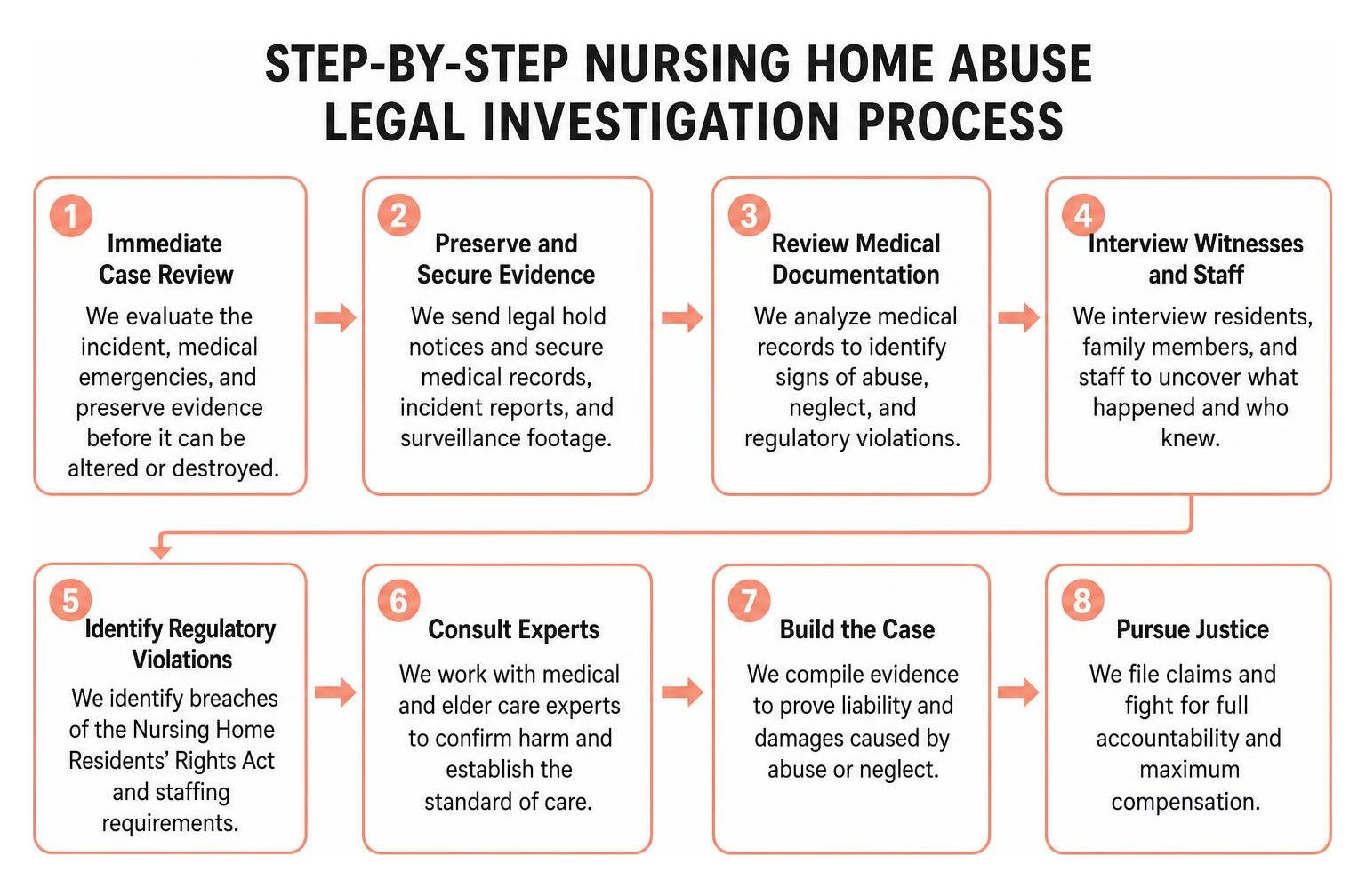
Uncovering the truth behind a facility’s denial requires systematic, aggressive discovery. When our team investigates a facility in Bergen County, Passaic County, or anywhere across New Jersey, we immediately take steps to preserve evidence before it can be altered or destroyed.
Our legal investigation typically involves:
- Subpoenaing Shift Logs and Timecards: Comparing actual caregiver punch-in records against mandatory state staffing minimums to identify severe understaffing during the incident.
- Reviewing Electronic Health Records (EHR): Auditing timestamps on medication administration records, turning charts, and nursing notes to spot back-dated or fabricated entries.
- Retrieving State Inspection Records: Analyzing historical deficiency reports and citations issued by the New Jersey Department of Health Division of Health Facility Survey and Field Operations.
- Deposing Caregivers and Administrators: Taking sworn depositions of floor aides, registered nurses, directors of nursing, and corporate administrators.
- Consulting Geriatric Medical Experts: Partnering with board-certified geriatricians and nursing experts to demonstrate precisely where the facility breached the accepted standard of care.
Through these steps, our personal injury lawyers in New Jersey construct an evidence-driven case showing how corporate neglect directly caused harm.
The Legal Process and Filing Deadlines in Garden State Courts
In New Jersey, personal injury and elder abuse lawsuits are governed by a strict statute of limitations under N.J.S.A. 2A:14-2. In most situations, you have two years from the date of the injury (or from the date when the injury was reasonably discovered) to file a formal complaint in civil court.
If facility neglect tragically results in a resident’s death, the family has two years from the date of passing to file a legal claim through experienced wrongful death lawyers in New Jersey.
Additionally, if a lawsuit alleges medical malpractice against licensed healthcare providers (such as physicians, physical therapists, or registered nurses), New Jersey court rules require the plaintiff to serve an Affidavit of Merit within 60 to 120 days of the defendant’s answer. This document, signed by an independent medical expert, confirms under oath that there is a reasonable probability that the care fell outside acceptable professional standards. Failing to meet this requirement can result in the permanent dismissal of the lawsuit.
Determining Liability and Recovering Damages in Elder Abuse Claims
Holding a nursing home accountable involves identifying every negligent party in the corporate ownership structure. While individual caregivers can be held responsible for direct abuse, the overarching corporate entity operating the facility is typically vicariously liable for the actions of its employees and directly liable for systemic administrative failures.
Claims may arise from unsafe building conditions, improper maintenance, or inadequate security, which fall under the expertise of premises liability lawyers in New Jersey.
Proving Negligence and Securing Essential Evidence
To build an unassailable case, we gather physical, digital, and regulatory evidence:
- Physician and Hospital Records: Documenting the emergency medical interventions required immediately after removal from the facility.
- Facility Internal Incident Reports: Internal logs created immediately after falls, skin tears, or medication mix-ups.
- Facility Maintenance & Environmental Audits: Demonstrating broken call bells, inadequate lighting, or slippery hallways.
- Employee Incident and Injury Files: Analyzing internal staffing issues, including internal reports of workplace related caregiver injuries that left shifts understaffed.
- Surveillance and Security Footage: Preserving hallway camera feeds that show staff response times and floor activity.
How Nursing Home Abuse Lawyers New Jersey Evaluate Financial Compensation
Valuing an elder abuse claim requires analyzing both economic losses and the profound physical and psychological trauma endured by the resident. In New Jersey, nursing home abuse lawsuits have resulted in average settlements ranging from $150,000 to $500,000, with catastrophic injury and severe wrongful death verdicts climbing substantially higher.
Victims and their families may seek compensation for:
- Medical Expenses: All emergency room visits, ICU care, specialized surgeries, physical therapy, and hospital stays necessitated by the abuse.
- Relocation and Future Care Costs: Expenses incurred transferring the resident to a safer, higher-quality long-term care facility.
- Pain and Suffering: Compensation for physical agony, bedsores, bone fractures, fear, depression, and loss of life’s enjoyment.
- Punitive Damages: In instances of egregious, intentional, or maliciously indifferent conduct, New Jersey courts may award punitive damages to punish the facility and deter future misconduct.
- Statutory Attorney Fees: Under the New Jersey Nursing Home Residents’ Rights Act, prevailing plaintiffs may be entitled to reasonable attorney fees and litigation costs, encouraging victims to enforce their legal rights regardless of financial standing.
Frequently Asked Questions About Nursing Home Abuse in New Jersey
What is the statute of limitations for nursing home neglect cases in NJ?
Under N.J.S.A. 2A:14-2, the general statute of limitations for personal injury and nursing home neglect claims in New Jersey is two years from the date the harm occurred or was discovered. In wrongful death cases, the two-year clock begins on the date of death. Because gathering medical audits and expert Affidavits of Merit requires time, contacting an attorney immediately is essential.
How does the New Jersey Department of Health investigate elder abuse complaints?
The New Jersey Department of Health (NJ DOH) Division of Health Facility Survey and Field Operations conducts unannounced, on-site inspections in response to complaints. State inspectors review medical charts, interview staff and residents, and evaluate safety procedures. If violations are found, the state issues formal deficiency citations, fines, or conditional license restrictions. These state findings can serve as powerful evidence in civil litigation.
How much does it cost to hire an attorney for an elder abuse lawsuit?
At Affinity Injury Law, we represent clients on a contingency fee basis. This means there are no upfront costs, retainers, or hourly bills. Our legal fees and case expenses are only collected if we secure a financial settlement or trial verdict on your behalf. If we do not win, you owe us nothing.
Conclusion
No elder should suffer from neglect, physical mistreatment, or administrative indifference in a facility entrusted with their daily well-being. Holding negligent nursing homes accountable protects your loved one and forces facilities to clean up their operations for every resident in their care.
At Affinity Injury Law, our legal team provides dedicated advocacy across Bergen County, Passaic County, and throughout New Jersey—including Lyndhurst, Hackensack, Paterson, Fort Lee, Paramus, Fair Lawn, Passaic, Clifton, and Wayne. Our firm offers multilingual support, ensuring that language is never a barrier when your family needs justice.
If you suspect your loved one is experiencing facility neglect or mistreatment, meet our attorneys and discover how our team fights for vulnerable seniors. Connect with our nursing home abuse lawyers in New Jersey today or contact us for a free, confidential case review.